23 February 2026
Real Estate Sale in Marrakech: The Complete Guide to Succeed During Peak Season
Achieving a successful real estate sale in Marrakech requires a keen understanding of this vibrant market, the sun-drenched tourist heart of Morocco. However, the success of your project often hinges on… the timing. Whether you are looking to sell a luxury villa in the Palmeraie or invest in a modern apartment in Guéliz, here is our advice on how to navigate the Marrakech market during its peak seasons.
Why is peak season the key time for real estate in Marrakech?
The market cycle: Spring and Autumn are the transaction peaks
In Marrakech, peak real estate season follows a simple logic: pleasant weather + a full city = more viewings = more offers.
Spring: travelers return, weather is ideal for visits (terraces, gardens, pools).
Autumn: activity resumes after summer, with a strong presence of “decisive” buyers (investment, second homes).
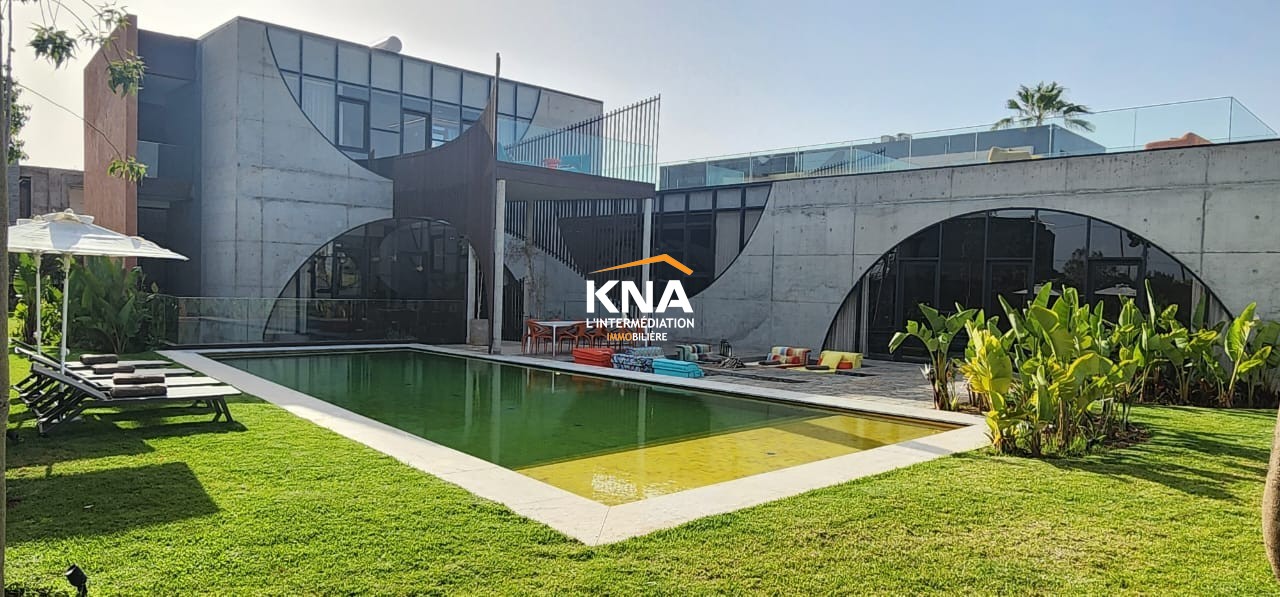
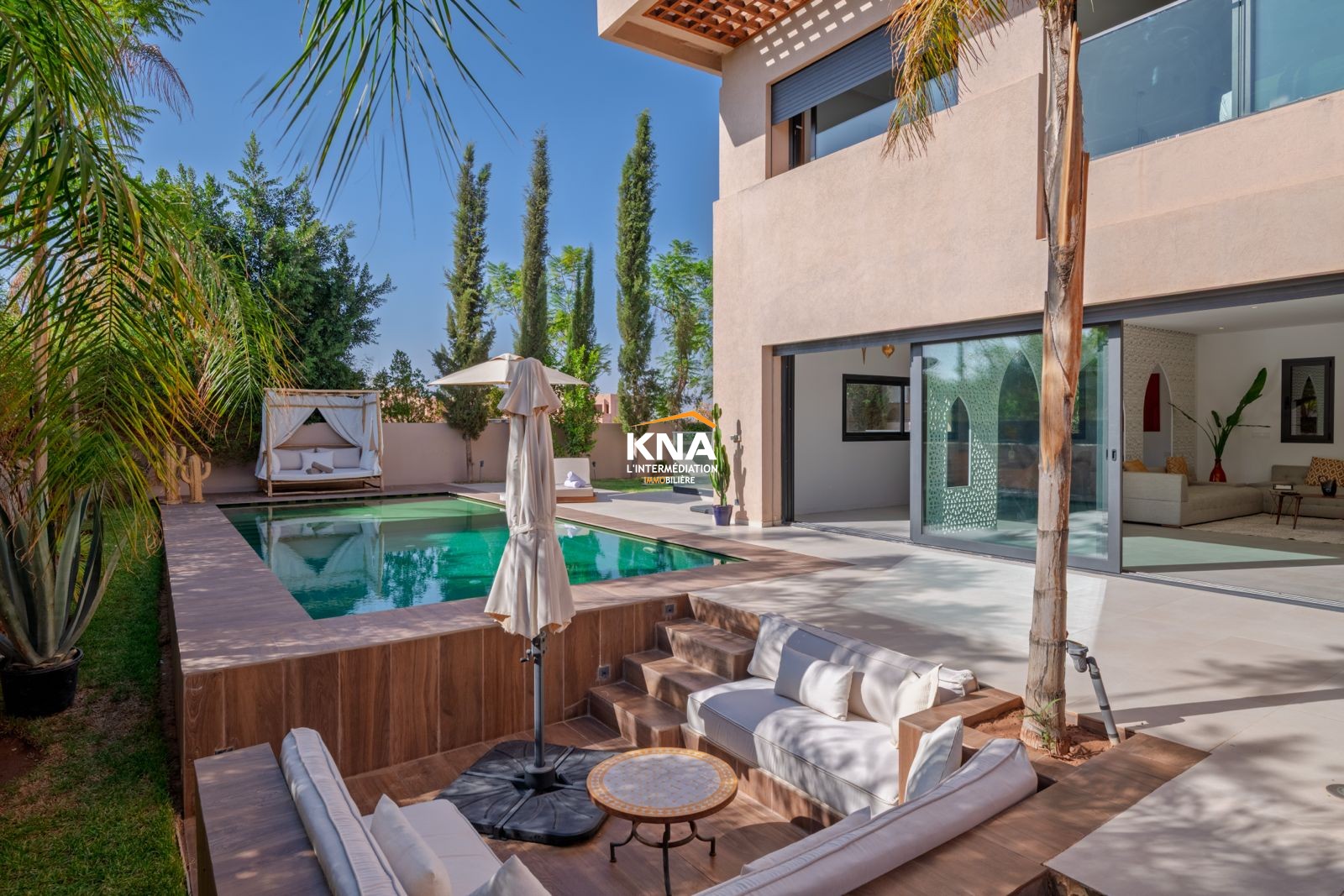
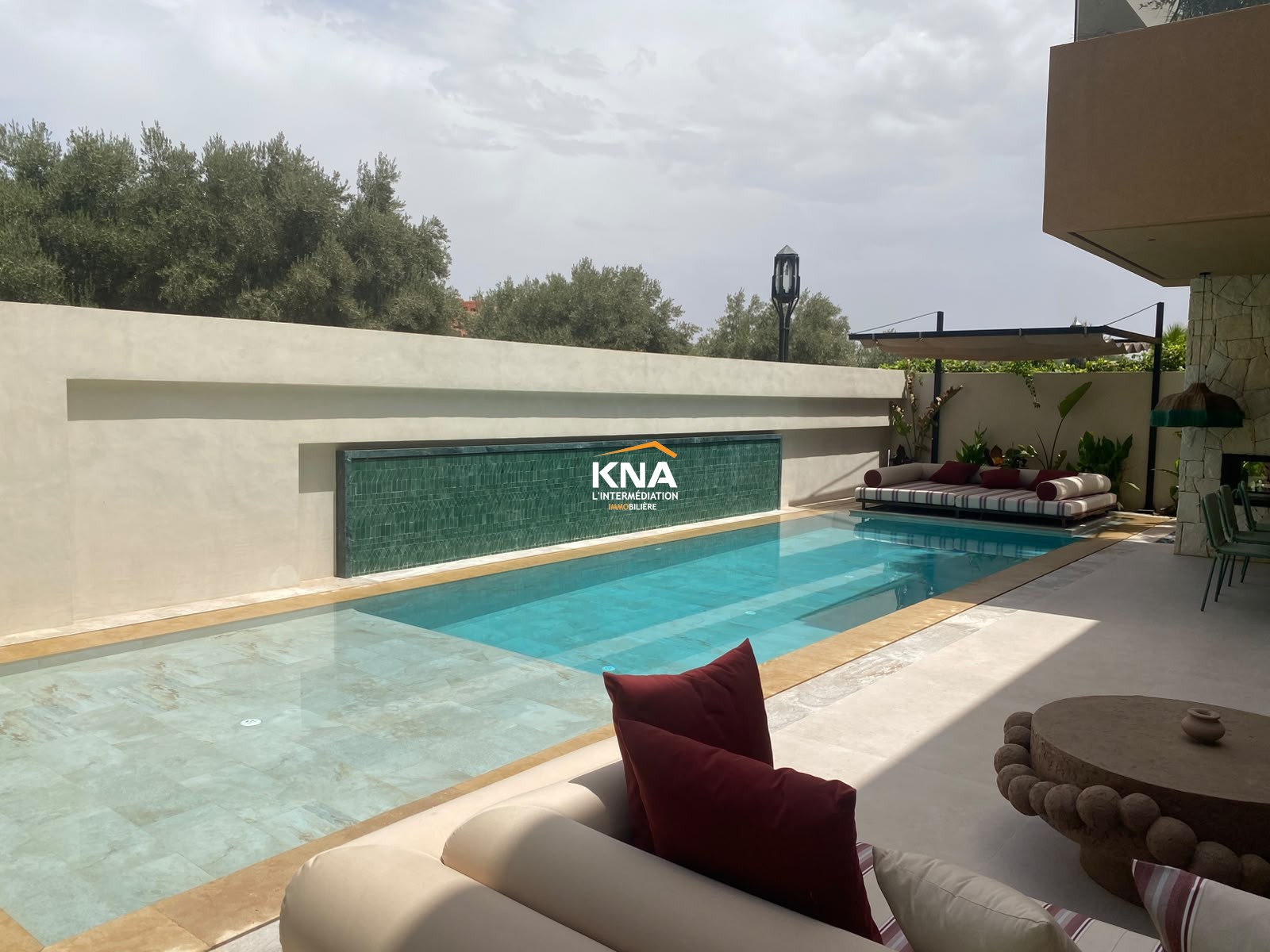
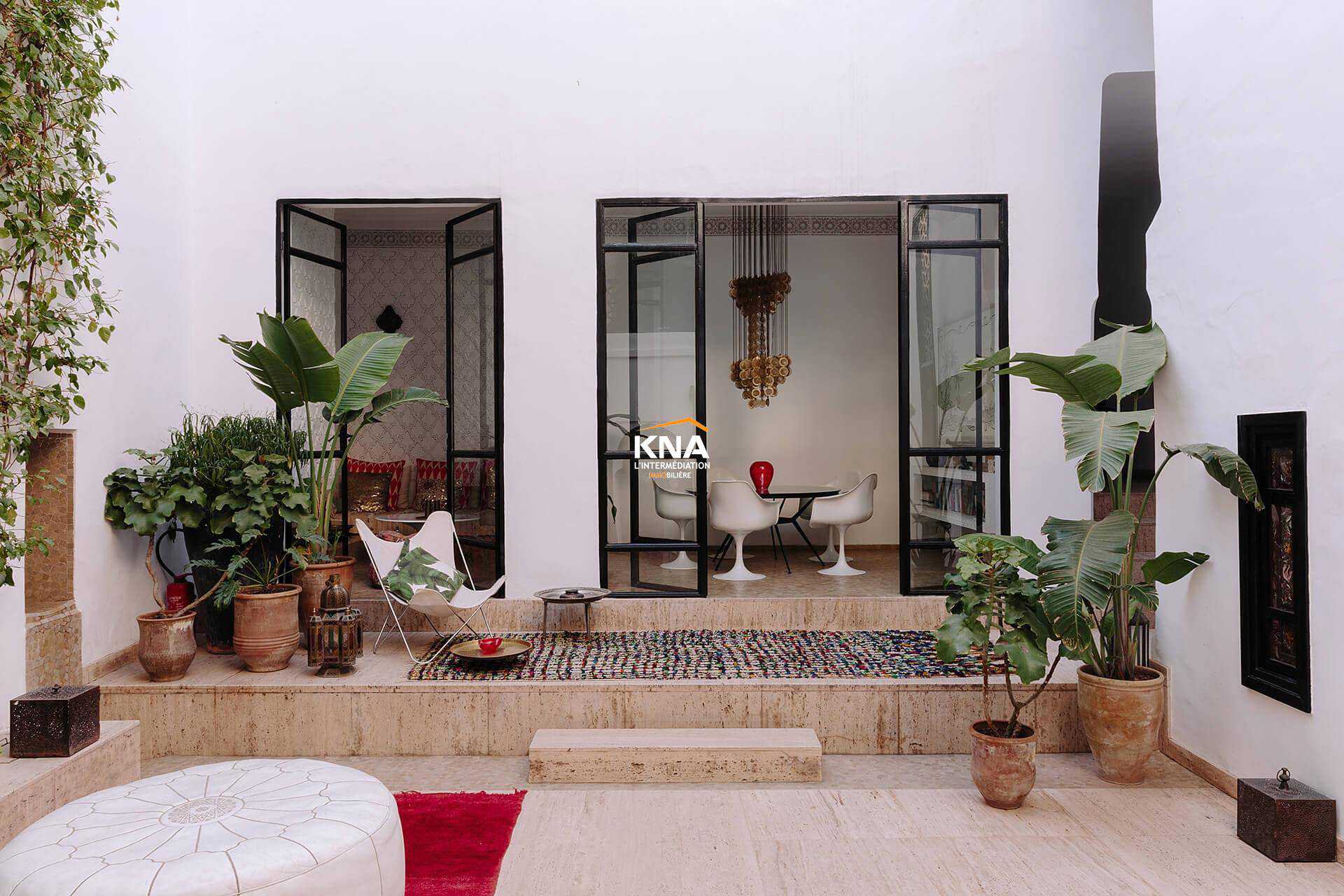
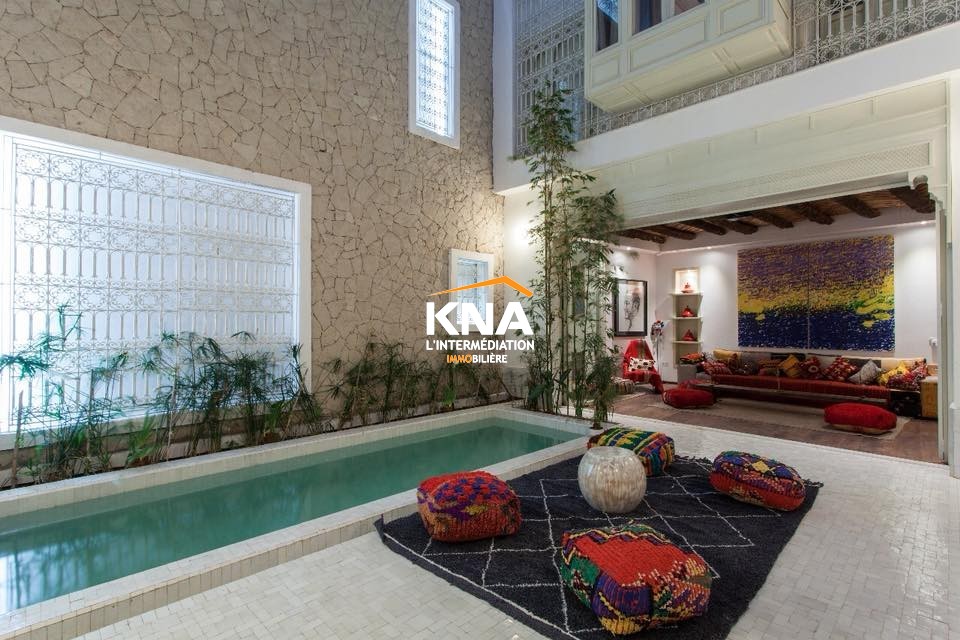
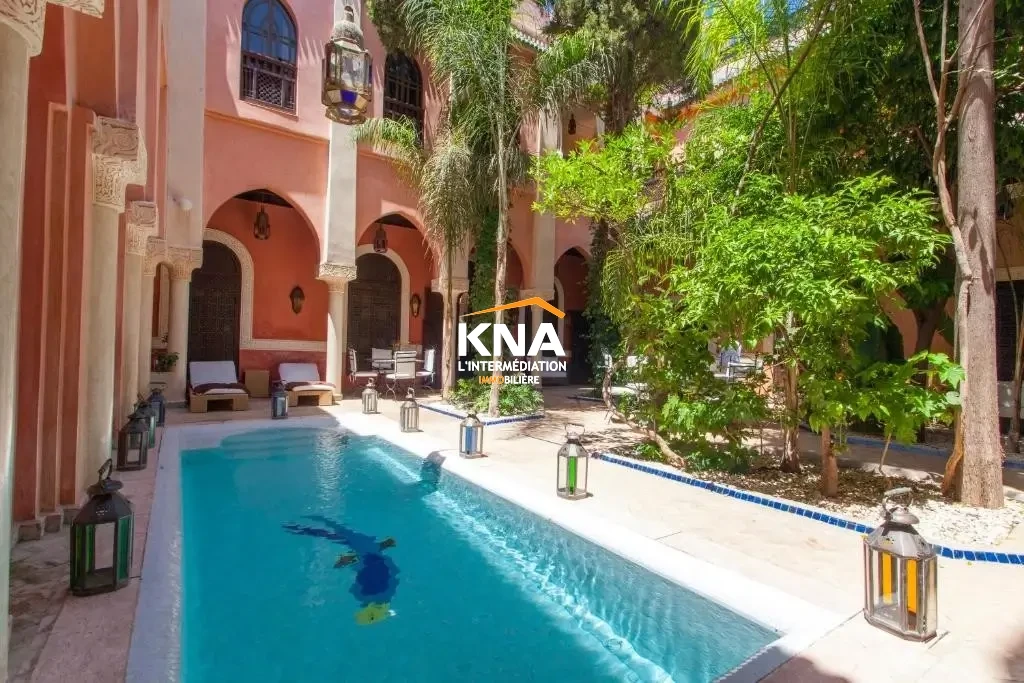
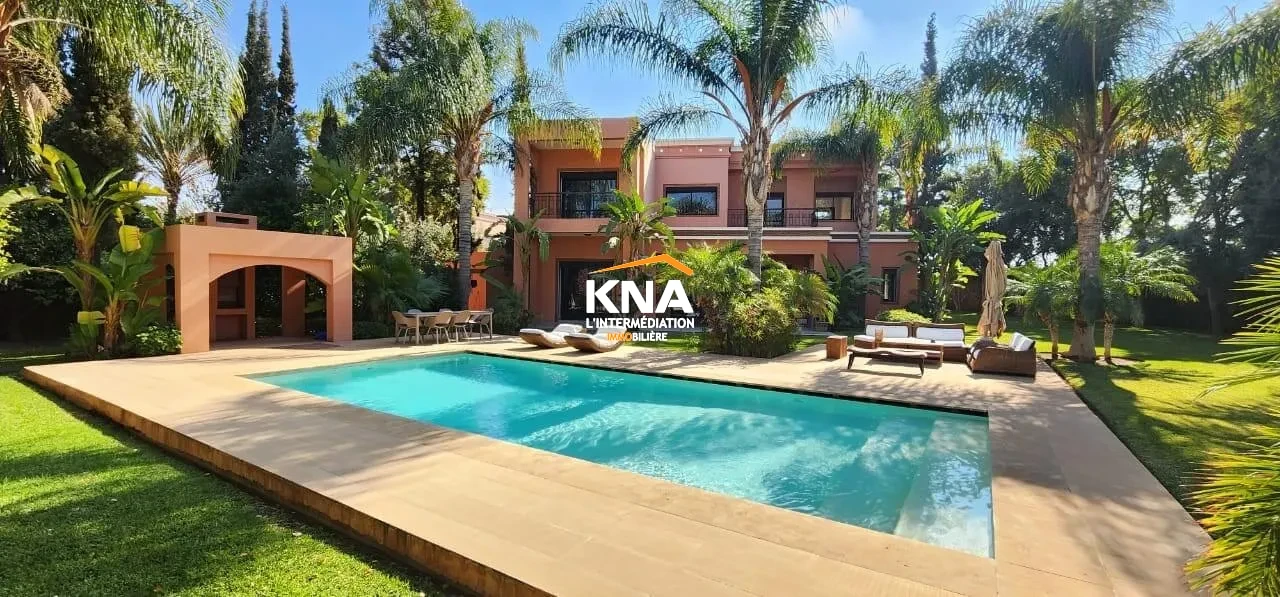
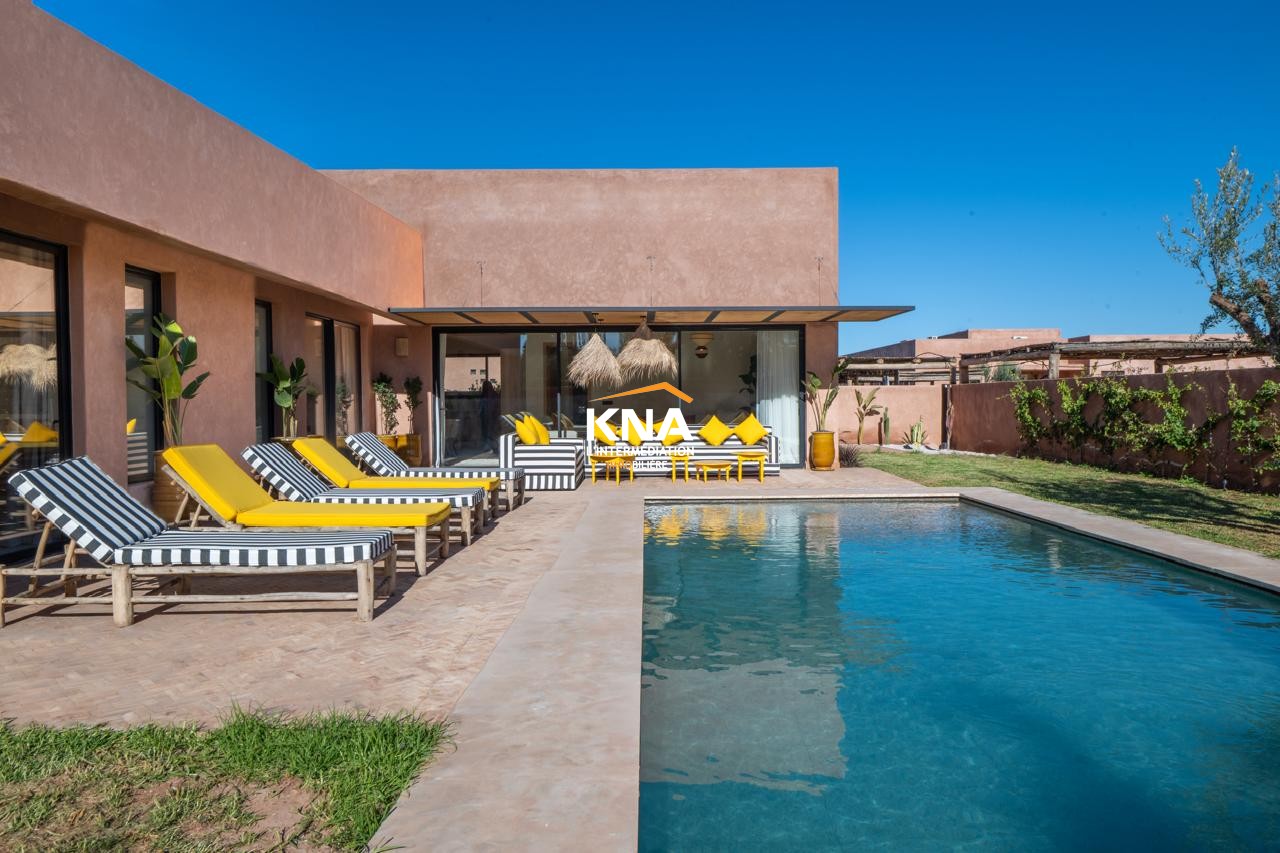
On-the-ground insight: a villa can look “standard” in photos… but during a viewing, light, volumes, and outdoor spaces (heated pool, garden, patio, zellige, tadelakt) often make the decision.
Buyer profiles: who invests in Marrakech (benchmarks 2025 → early 2026)?
The trends observed in 2025 remain broadly valid in Q1 2026 (today’s date: February 16, 2026):
Rental investors: looking for rental yield (short-term / long-term).
European retirees: comfort, accessibility, healthcare, higher-end living, gated residences.
MRE (Moroccans Living Abroad): “heritage” purchase + family use.
Digital nomads / entrepreneurs: lively districts, fiber internet, smart home features, ducted A/C, security.
The appeal of the “Red City”: lifestyle + international reach
Marrakech sells more than square meters:
a lifestyle (panoramic terraces, Atlas views, golf, spas, restaurants),
and a hybrid use: second home + profitability (ROI) during strong demand periods.
Market snapshot: prices and sought-after neighborhoods (2025 benchmarks)
Prices vary widely depending on location, standing, residence quality, floor level, view, parking, finishing (marble, fitted kitchen, home automation), and above all the available supply during peak season. The ranges below are indicative.
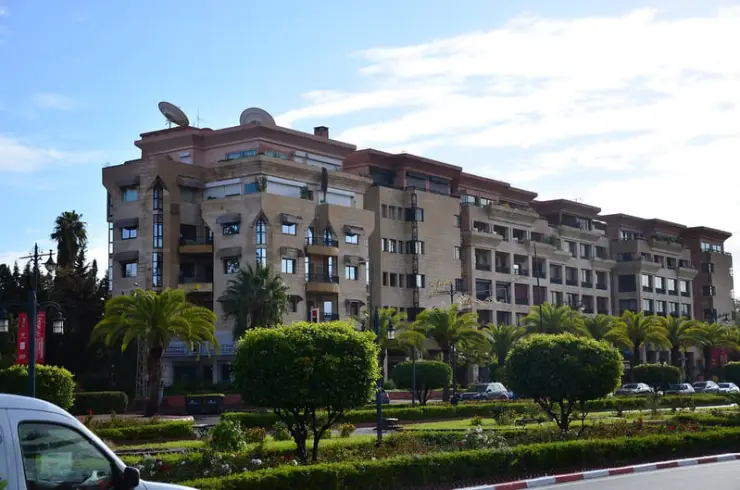
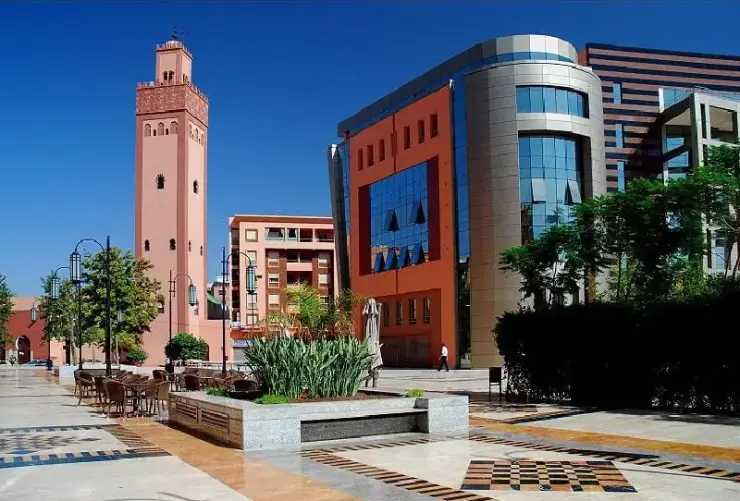
Hivernage & Guéliz: the beating heart of upscale living
Highly demanded for:
proximity to M Avenue, Carré Eden, cafés and shops,
availability of recent residences (elevator, concierge/security, underground parking).
Listing price benchmark: 15,000 to 45,000 MAD/m² (ultra-premium / new-build / prime location).
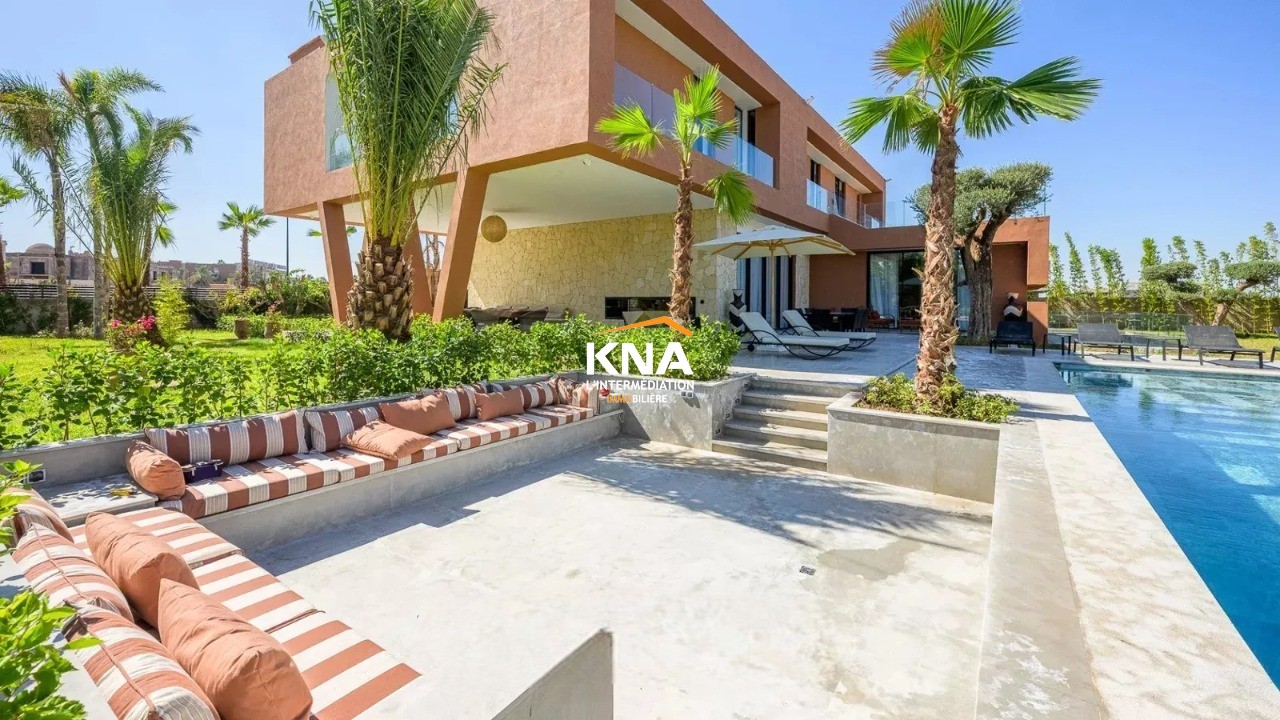
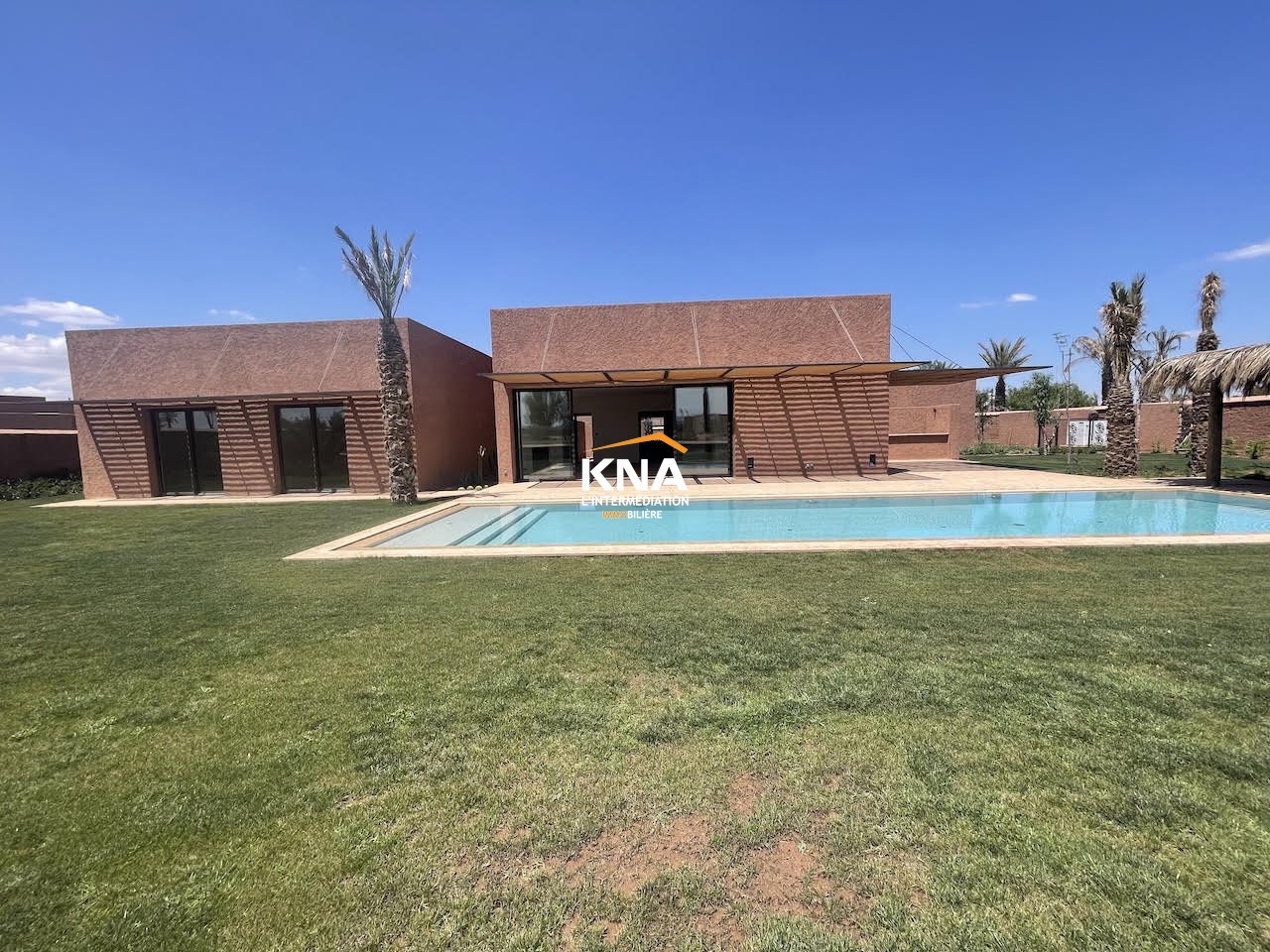
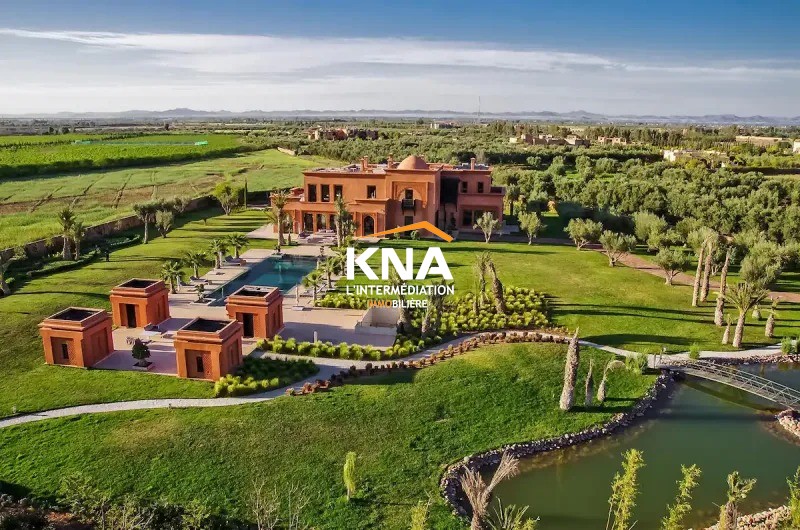
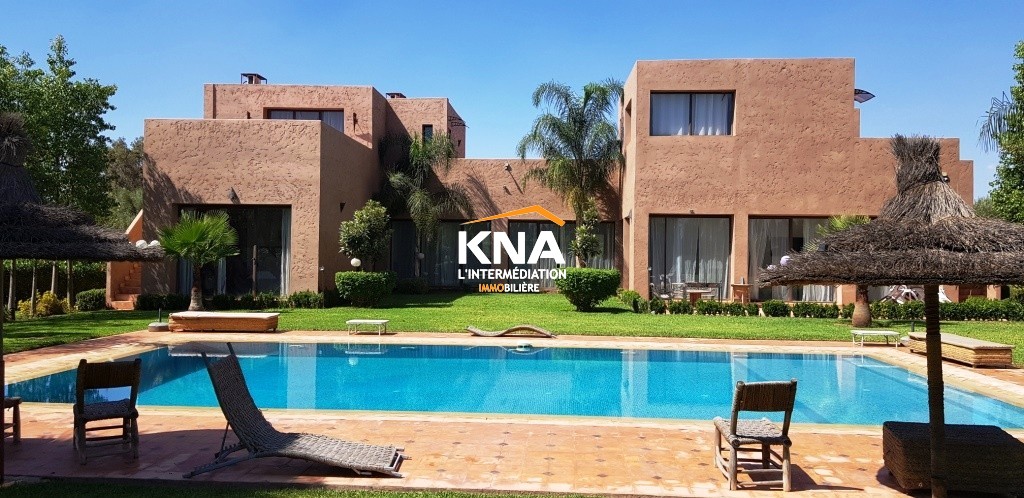
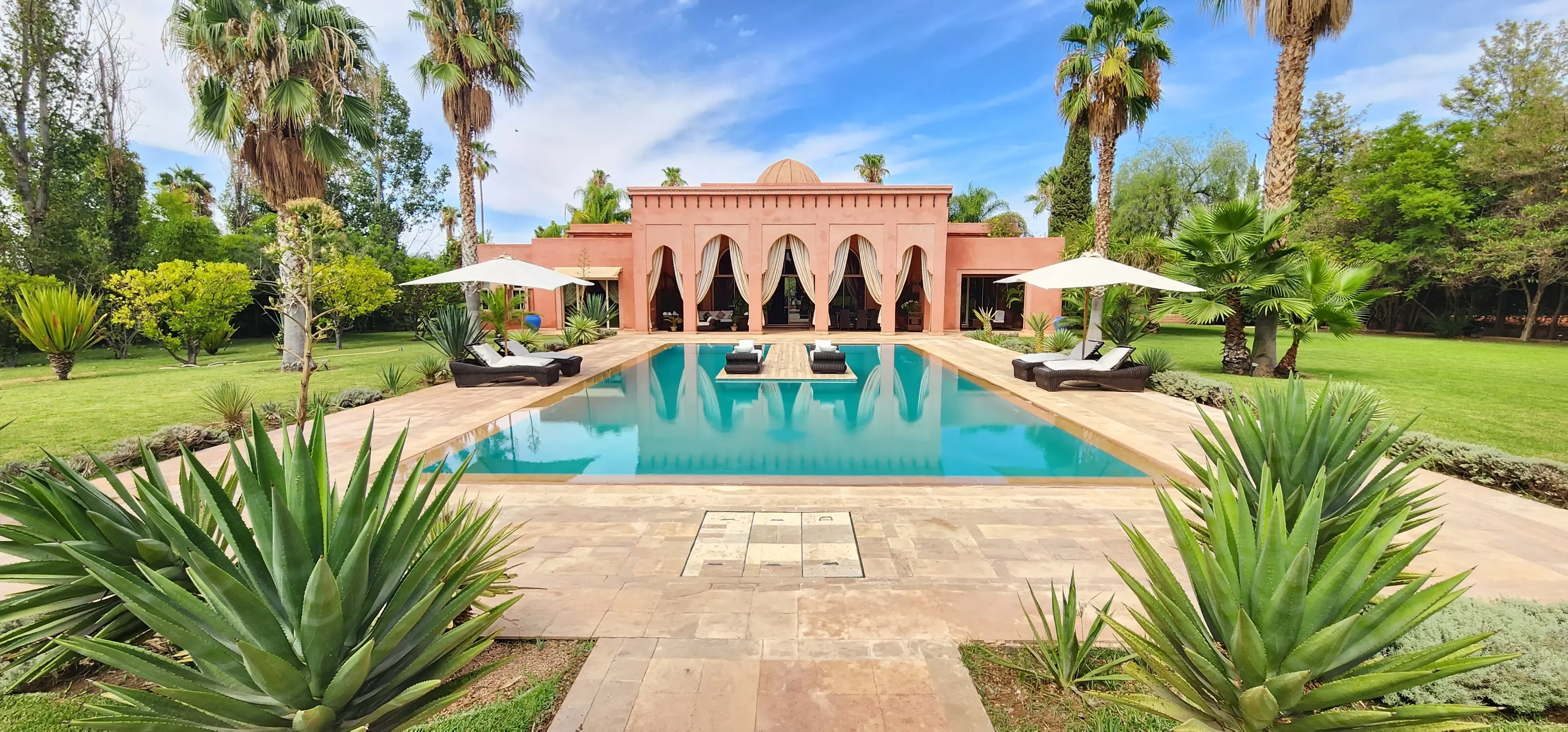
The Palmeraie: exclusive high-end villas among palm trees
Typically sought for:
large plots, peace and privacy,
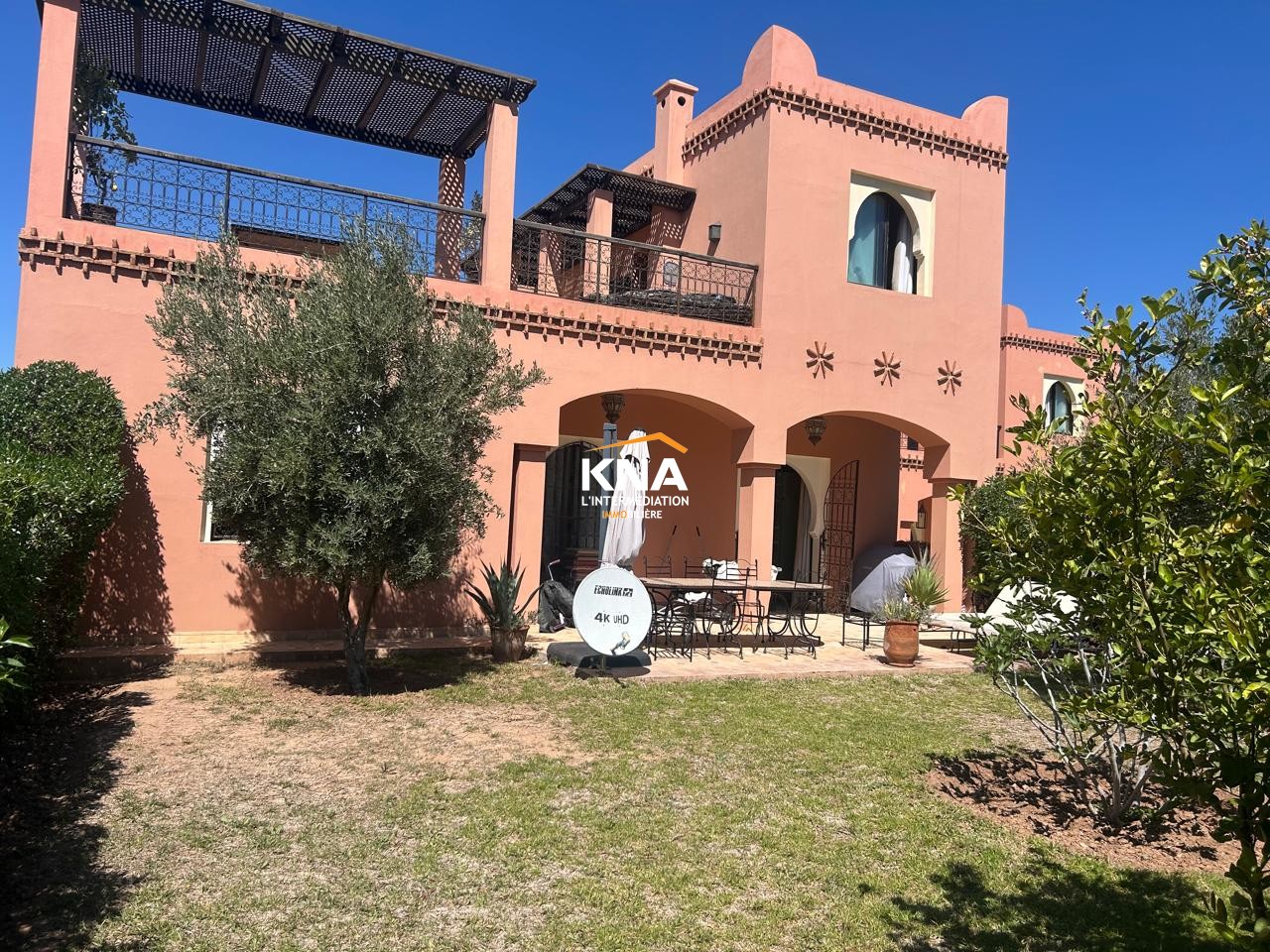
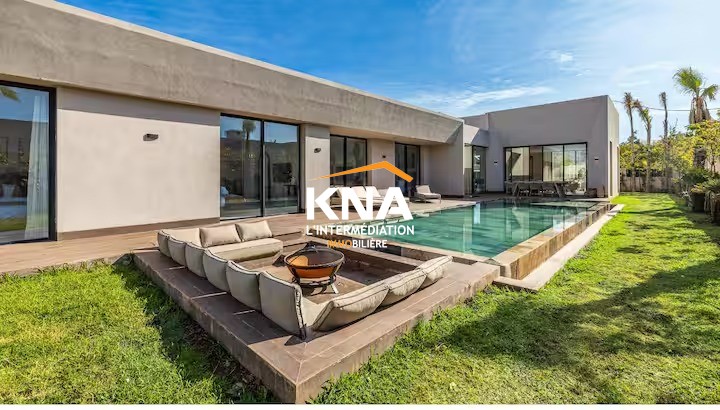
contemporary villas or arabo-andalusian style,
security, pool, garden.
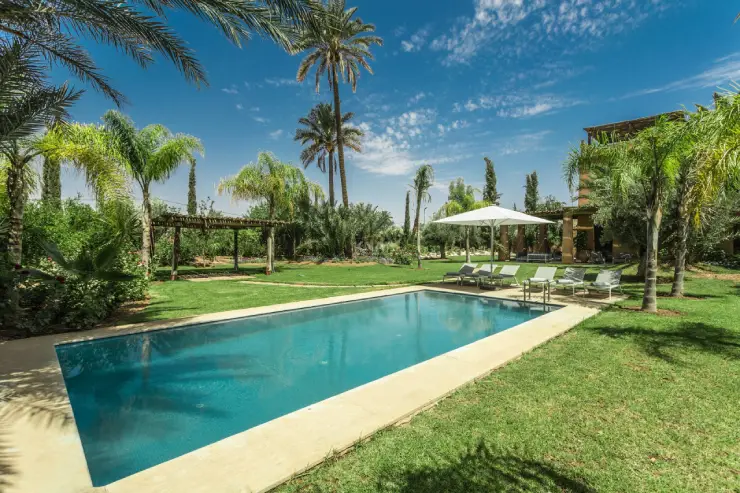
Peak-season advice: the condition of outdoor areas (lawn, palms, lighting, pool filtration) directly impacts negotiation.
The Medina: timeless riads & “short-term rental” investment
The Medina attracts buyers for:
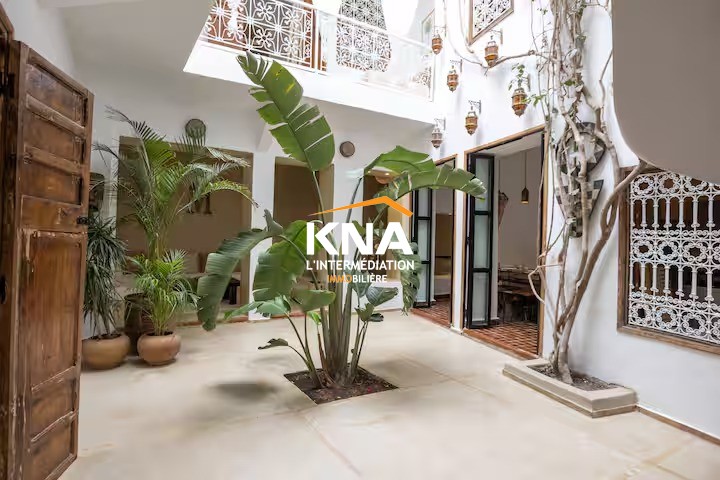
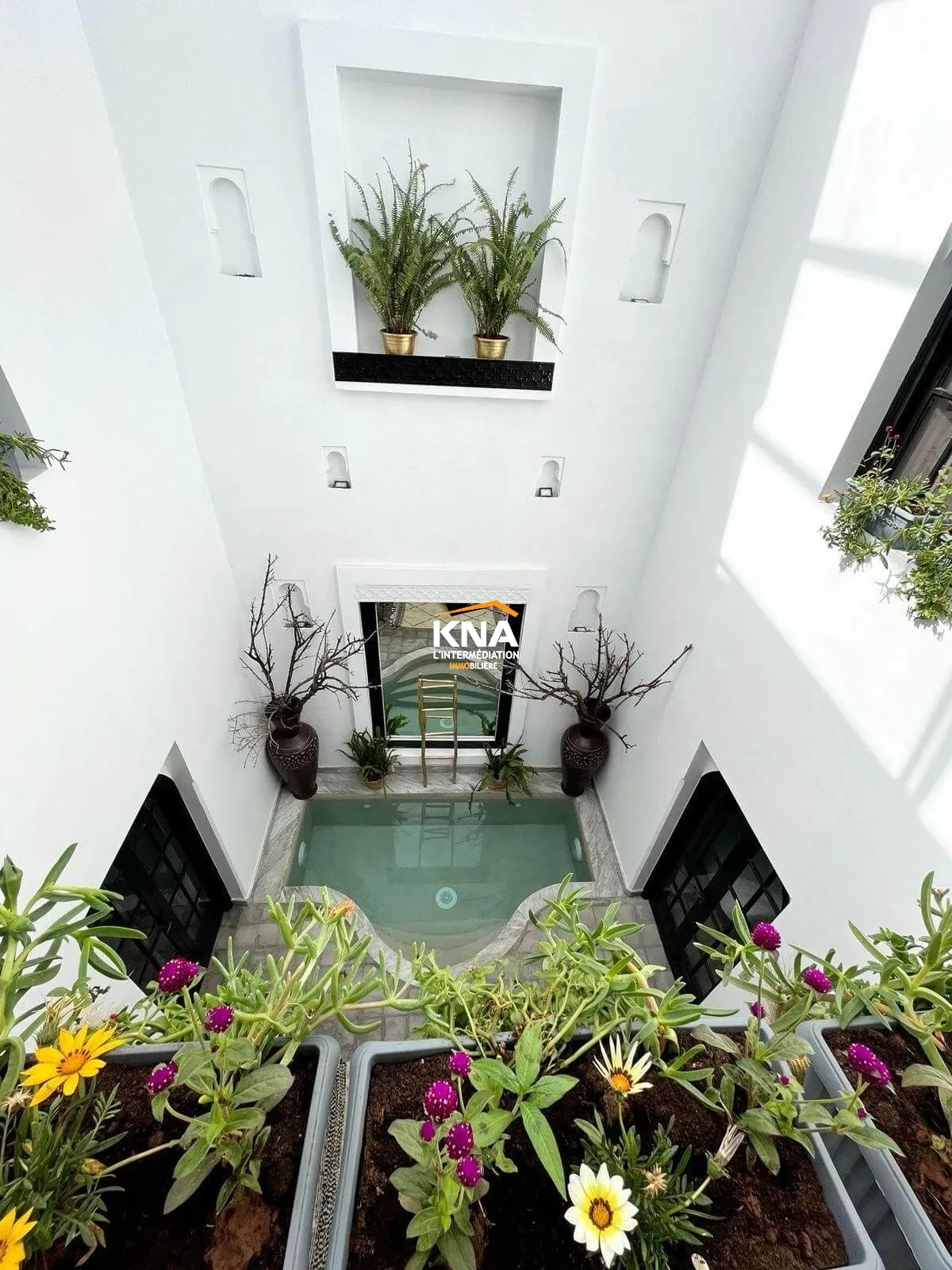
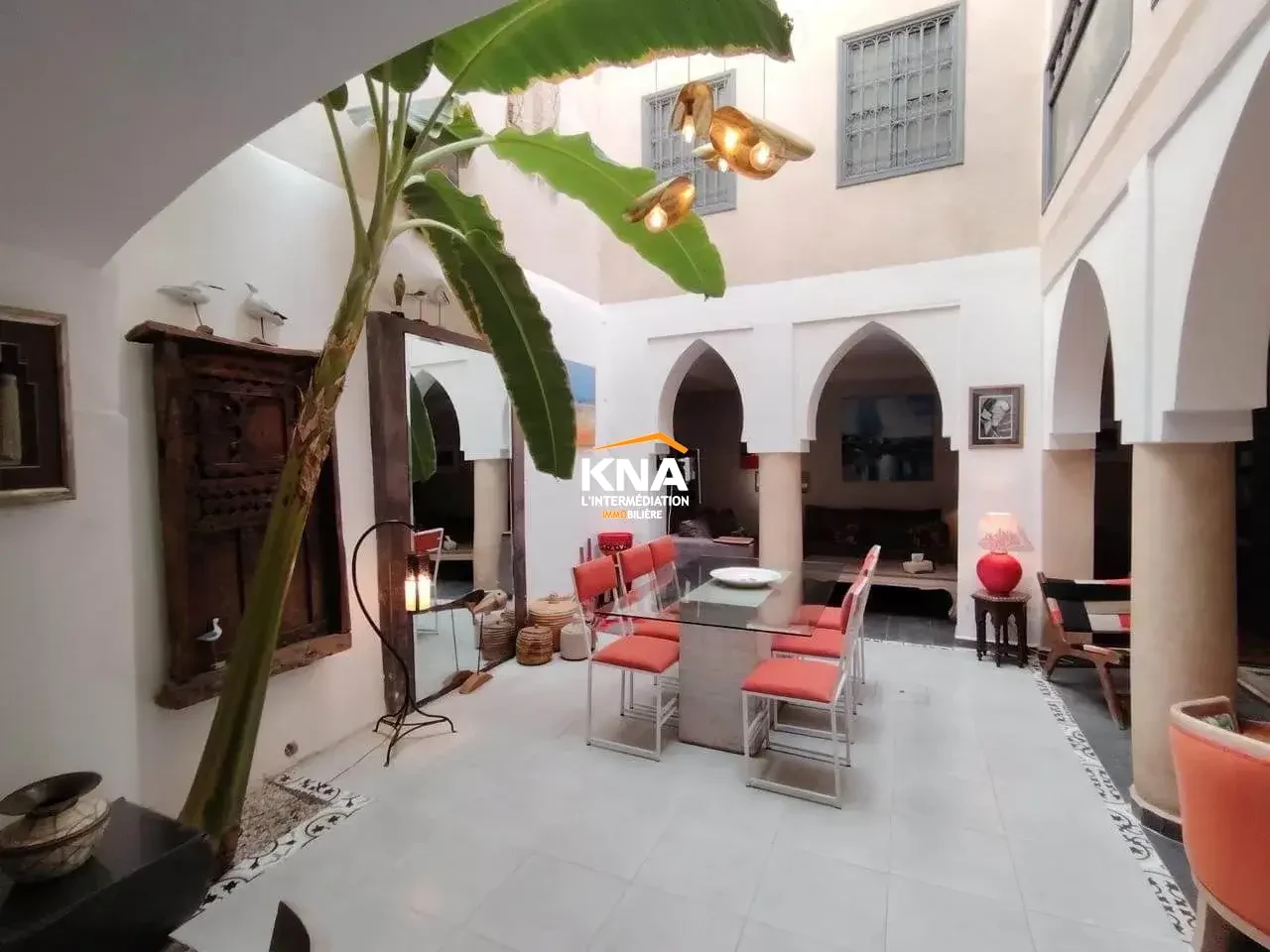
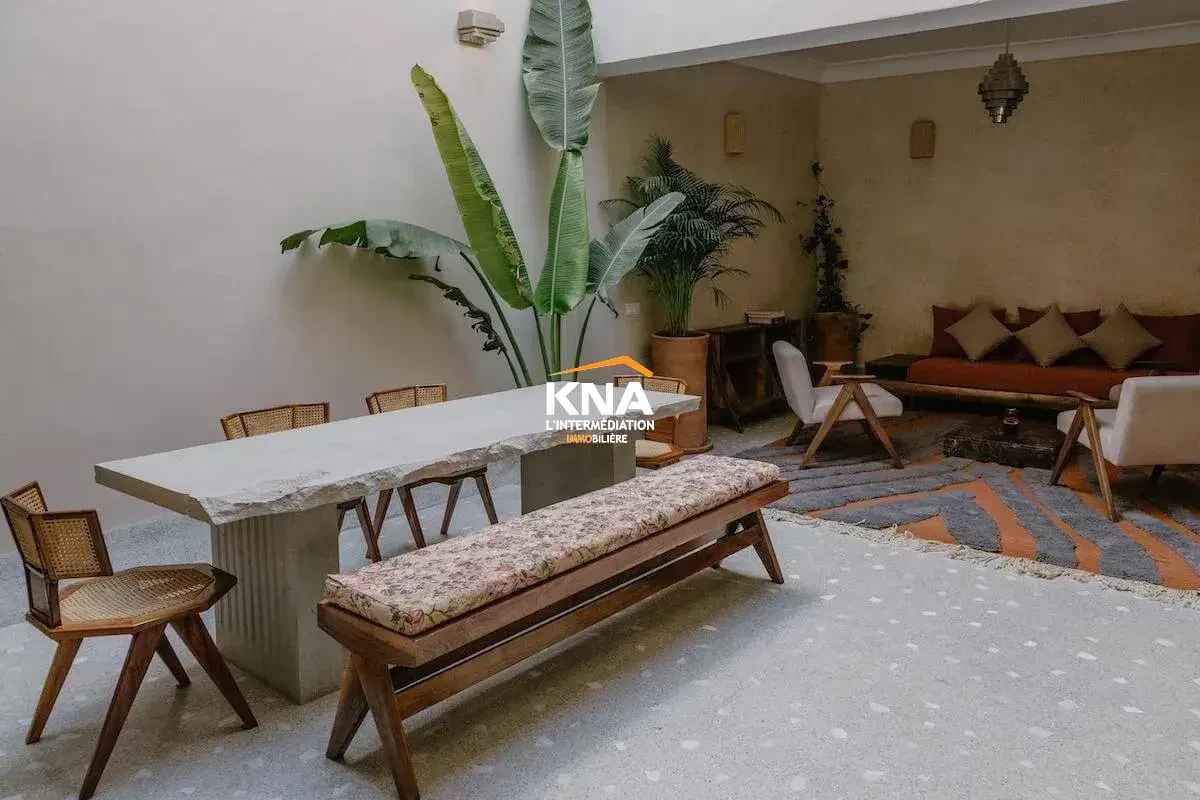
authenticity (patio, fountain, tadelakt),
renovation projects / guesthouse concepts,
“love at first sight” effect during visits.
Key point: in the Medina, value depends heavily on accessibility, neighborhood context, and structural condition (humidity, roof, drainage).
Route de l’Ourika & Amelkis: golf growth and gated communities
Sought after for:
gated residences, modern villas,
proximity to golf courses, views, tranquility,
family purchase or high-end investment.
Strategies to sell your property quickly (and at the best price)
The art of “Marrakchi” home staging
Goal: sell a feeling, not only a floor plan.
Simple checklist:
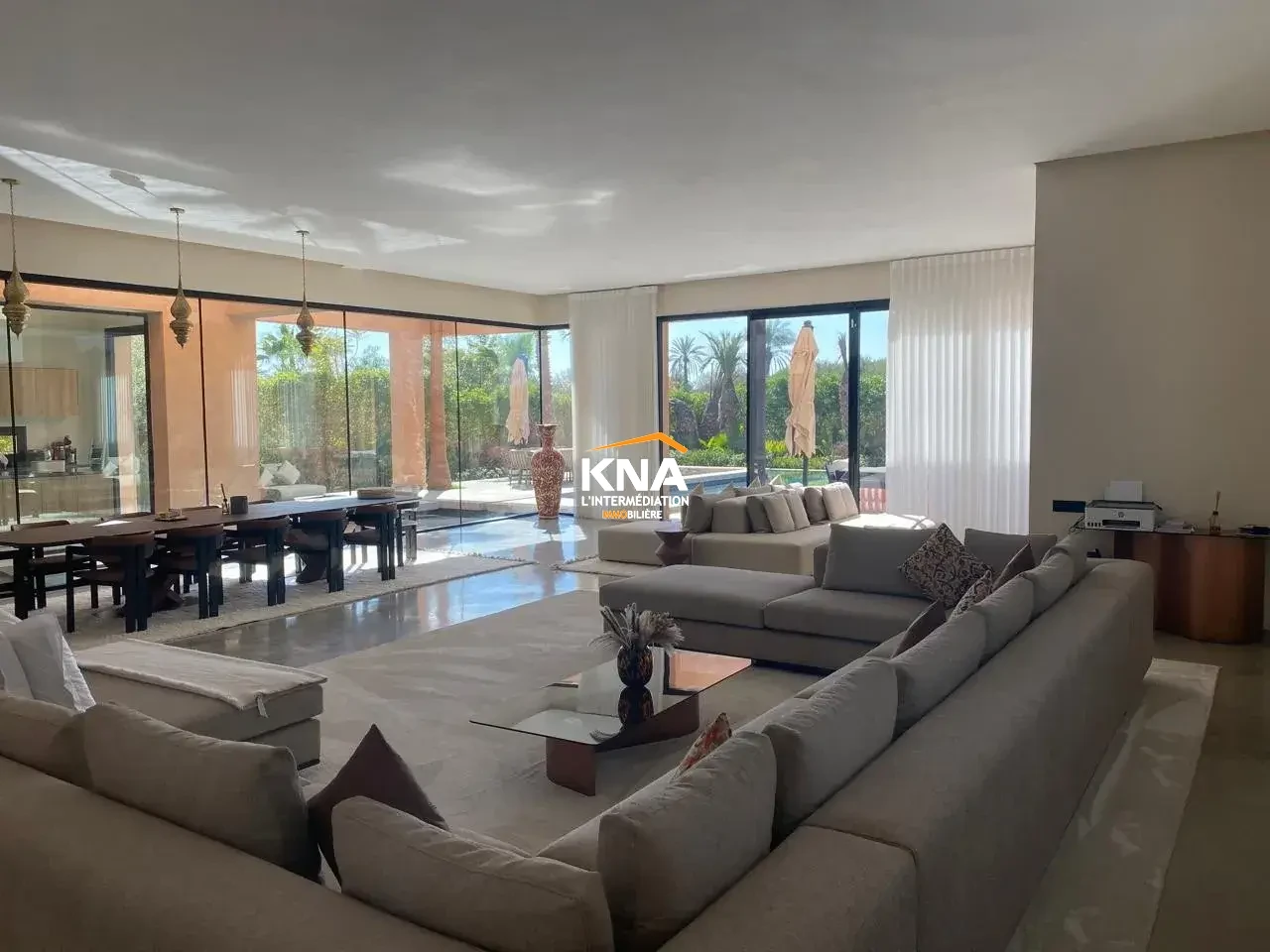
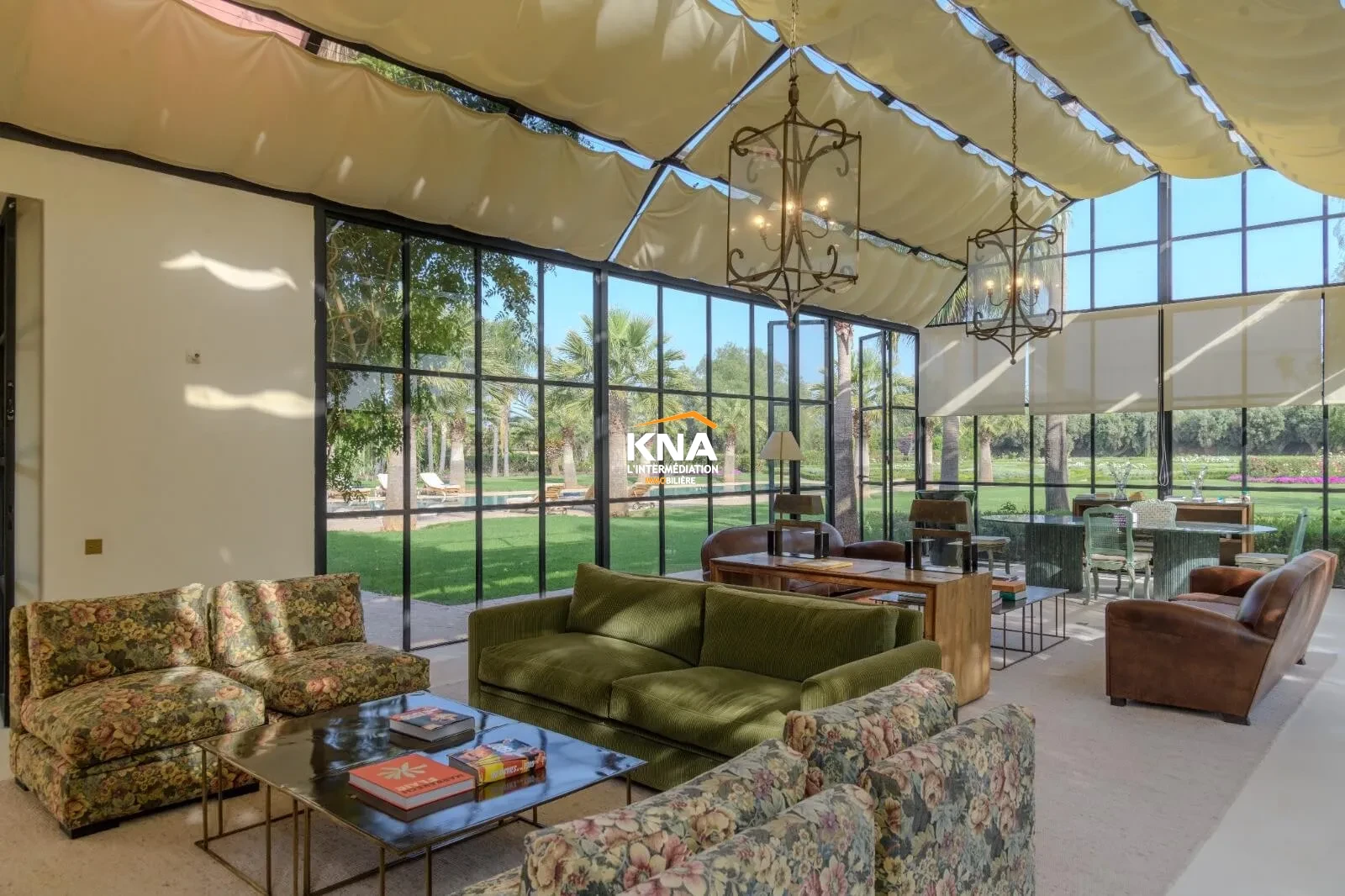
Light: open curtains, warm bulbs, mirrors.
Controlled authenticity: highlight zellige/tadelakt, keep décor clean and minimal.
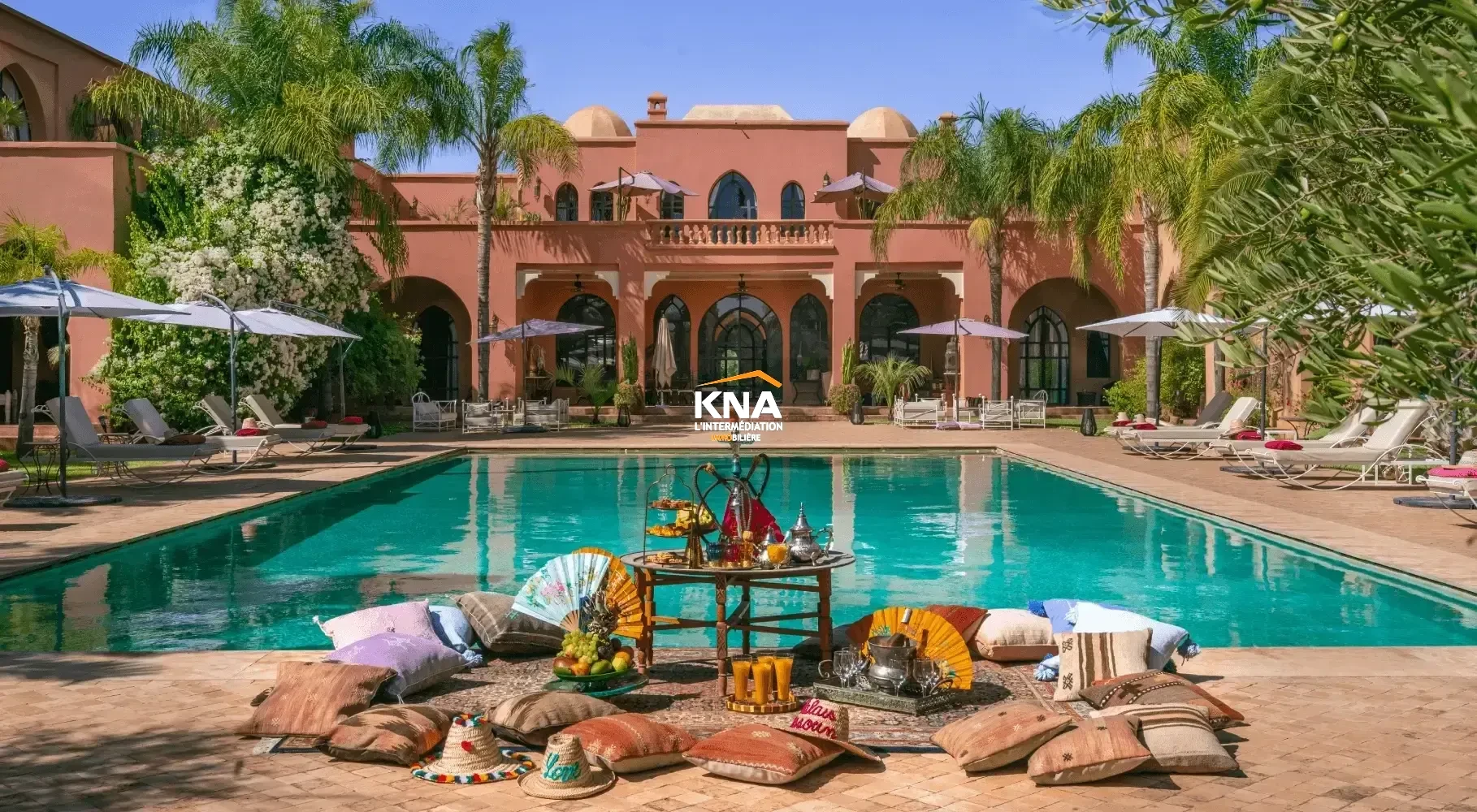
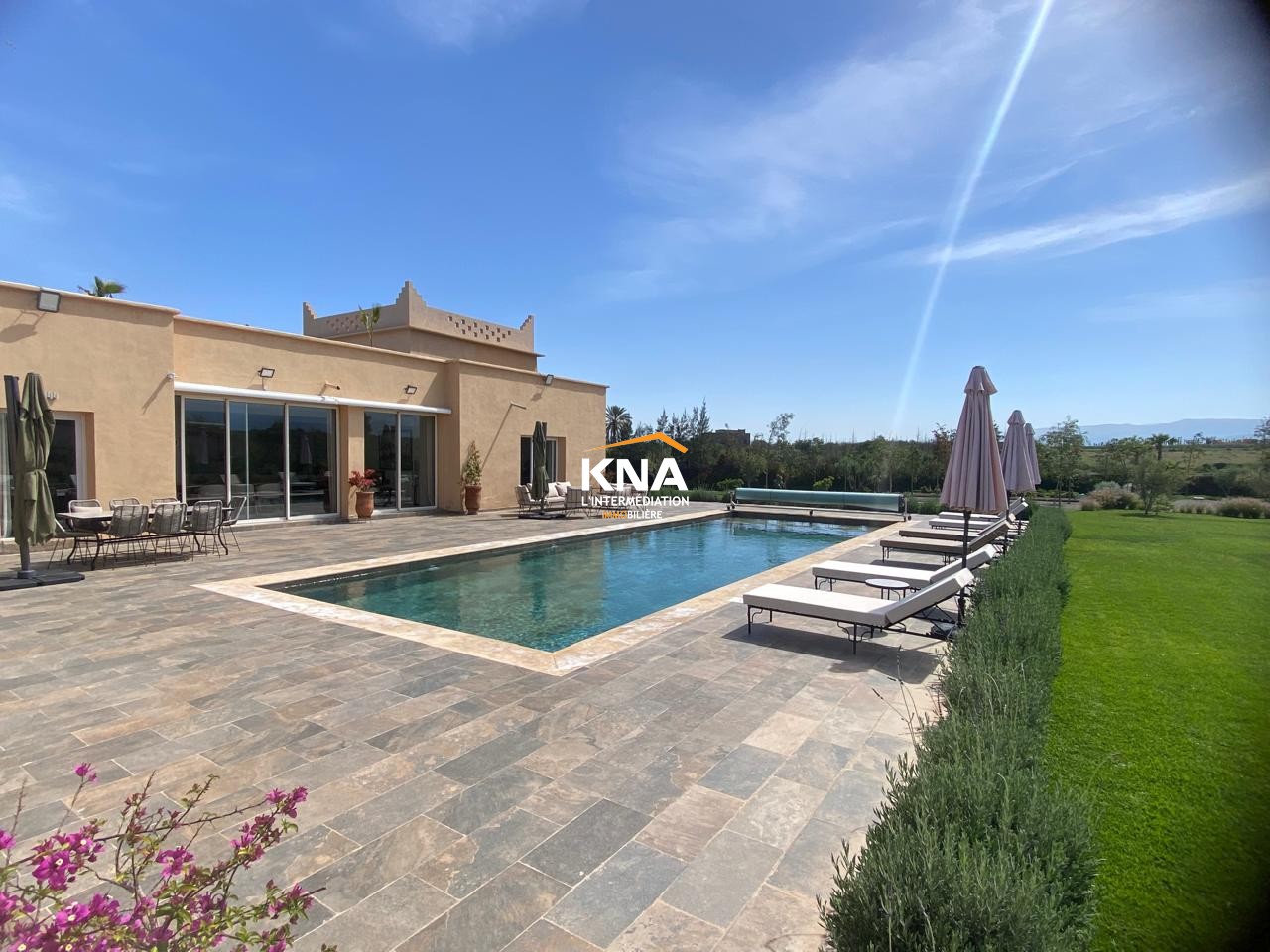
Perfect outdoors: pool, cushions, outdoor lounge, plants.
Comfort: test A/C, neutral odors, neat linens.
Setting the “right price”: comparative analysis + on-the-ground reality
The “right price” isn’t magic; it’s a level validated by:
recent sales (when available),
current competition (similar properties online),
observed time-to-sell by area (Guéliz ≠ Palmeraie ≠ Medina).
CTA (place right after this section):
Estimate your property in 2 minutes
Pro photo shoot + virtual tour: peak-season essentials
In peak season, buyers compare fast. You must win at the first scroll.
Essentials:
clean HDR, wide-angle photos without distortion,
short video (30–60 sec) + smooth sequence,
virtual tour (very useful for non-residents & MRE).
Choosing the right partner: local agency + international reach
A strong agency in Marrakech should combine:
micro-neighborhood knowledge (Golden Triangle, Camp El Ghoul, Targa, Agdal…),
buyer network (MRE, foreigners, investors),
filtering (qualified visits) + notary/administrative follow-up.
Buyer’s guide: securing your investment in Morocco
Legal pathway: land title, notary, land registry
To secure a purchase:
check the land title (legal status, encumbrances, mortgages),
work with a notary (drafting, checks, final deed),
complete publication and procedures with the Land Registry (ANCFCC).
Real estate taxation: registration duties, TPI and exemptions
Costs vary depending on structure, but for a “classic” purchase you often see:
Registration duties: often presented around 4%
Land registry fees: often indicated around 1% to 1.5% depending on sources/operations
Notary fees: often estimated around 1% to 1.5%, with 20% VAT on notary fees in published examples
“Quick budget” table (benchmark)
Copier le tableau
Item
Typical benchmark
Registration duties
~ 4%
Land registry
~ 1% to 1.5%
Notary fees
~ 1% to 1.5% (+ VAT on notary fees depending on case)
Misc. (stamps, copies, file fees…)
variable
Important: if using a mortgage, additional fees apply for collateral/registration.
Rental investment: what yield can you expect in peak season?
In peak season, short-term rentals can outperform, provided you manage well:
dynamic pricing,
property quality (bedding, wifi, A/C, fitted kitchen),
concierge services,
reviews, photos, check-in process.
Realistic approach: calculate annual yield (not only 2–3 months), including:
occupancy rate,
HOA/service charges,
maintenance and repairs,
concierge and cleaning,
taxation.
New-build vs Old (a comparison that truly helps decision-making)
Copier le tableau
Criteria
New (recent residences)
Old / riad to renovate
Thermal comfort / insulation
Often better
Very variable
Costs & maintenance
More predictable
Can bring surprises
Charm / authenticity
Sometimes “standardized”
Very strong (patio, materials)
Capital gain potential
Linked to district / scarcity
Strong if renovation is controlled
Technical risks
Generally lower
Structure, humidity, networks…
5 mistakes to avoid during peak season
Underestimating administrative timelines (especially for non-resident buyers).
Neglecting outdoors: pool, garden, irrigation, lighting.
Lack of responsiveness: a “hot” offer may be decided in 24–48 hours.
Forgetting compliance / permits (notably VNA outside urban areas).
Signing without legal expertise (lawyer + notary depending on complexity).
Differentiating focus: VNA (Non-Agricultural Vocation), clearly explained
What is VNA and why is it crucial?
The Non-Agricultural Vocation Attestation (AVNA/VNA) governs the acquisition (notably by foreigners) of land located outside the urban perimeter intended for non-agricultural projects. It relies on a regulatory framework (including Decree No. 2.04.683) and administrative guidelines aiming to standardize file processing. (auer.gov.ma)
Key takeaways:
Land outside urban zones + non-agricultural project = VNA to anticipate.
The decision may depend on the area (agricultural potential, regulated perimeters, etc.). (auer.gov.ma)
FAQ: everything about real estate sales in Marrakech
What is the average price per m² in Marrakech in 2025?
There isn’t a single reliable “average price” that summarizes Marrakech: Guéliz, Hivernage, Palmeraie, and the Medina are different markets. The best method is a comparative valuation by neighborhood + standing + condition + residence. Online valuation (or request an estimate based on recent comparable visits/sales)
Can a foreigner buy property in Morocco?
Yes, a foreigner can buy property in Morocco. However, land outside the urban perimeter may require a VNA attestation depending on the land status and the project.
What are notary fees for a real estate purchase in Marrakech?
In practice, many guides provide a total benchmark around 6% to 8% (depending on the case), including registration duties, land registry fees, and notary fees.
How long does it take to sell an apartment in Guéliz?
In peak season, an apartment “well located + well presented + correctly priced” can sell quickly… but timing mainly depends on:
price vs market,
floor/parking/elevator,
photo quality + qualified viewings.
What is VNA and who is concerned?
It’s an attestation linked to land (often outside urban areas) intended for a non-agricultural project, notably in acquisitions involving foreigners/investments. It is framed by a regulatory and administrative framework (including Decree No. 2.04.683) and implementation guidelines.
16 February 2026
Repatriation Guarantee in Morocco: The Complete Guide to Securing Your Real Estate Investment
Investing in Morocco can be a strong opportunity, if you also secure your exit. The repatriation guarantee in Morocco is the framework that allows you to transfer back abroad (in foreign currency) your initial capital, income, and capital gain without getting blocked. And the key is not an accounting spreadsheet: it’s a banking + legal alignment (“reconciliation”) built from the very first incoming transfer. citeturn0search0
Key sentence to embed in your strategy: In Morocco, you don’t prepare your repatriation at the time of resale, you prepare it from the very first purchase transfer.
That is exactly what a solid repatriation guarantee in Morocco is designed to protect.
What Is the Repatriation Guarantee in Morocco?
Legal definition & the role of the Office des Changes (convertibility)
The repatriation guarantee in Morocco is rooted in Morocco’s convertibility framework overseen by the Office des Changes. When an investment is funded in foreign currency under the applicable rules, the investor benefits from the ability to transfer income and the proceeds of sale/liquidation (oc.gov.ma)
Why it is critical for foreign investors and MREs
Without a proper repatriation guarantee in Morocco, you can end up with funds trapped in local dirhams. With a compliant repatriation guarantee in Morocco, you protect:
your initial capital
the repatriation of capital gains,
the transfer of investment-related income
“Accounting bank reconciliation” vs “investment bank alignment”
Most competitors treat “bank reconciliation” as pure bookkeeping
For an investor, “reconciliation” means linking, cleanly and provably:
the foreign-currency inflow (SWIFT proof / exchange slip),
the right type of account (convertible dirhams),
the notarial deed and land title (ANCFCC / Land Registry),
so your repatriation guarantee in Morocco remains enforceable at resale.
The “Reconciliation” Process: 3 Steps That Validate Your Repatriation
Step 1 — Open a Convertible Dirham Account
This is the operational foundation of a repatriation guarantee in Morocco: Moroccan banks can open foreign-currency and/or convertible dirham accounts for eligible profiles (including MREs and non-residents depending on status).
Why a standard local account can be a fatal mistake: if funds arrive into a regular dirham account, you may lose the “convertible” traceability needed to support the repatriation guarantee in Morocco during the outgoing international transfer.
Step 2 — Ensure end-to-end traceability (SWIFT MT103 + exchange documents)
Your repatriation guarantee in Morocco file must demonstrate the origin and route of funds:
SWIFT MT103 (international transfer proof),
exchange slip / currency conversion proof,
deposit slips, transfer references, and matching dates/amounts.
This documentation chain is what proves the investment was financed in foreign currency in line with the Office des Changes requirements.
Step 3 — Form 2 and the Investment Attestation (the “seal”)
The Office des Changes requires investment reporting / supporting documents and mentions Forms (2, 3, or 4) and/or bank attestations evidencing eligible funding in foreign currency/convertible dirhams.
In practice, a strong repatriation guarantee in Morocco is: banking proofs + notarial documents + traceability + consistent file architecture.
Why Investors Lose Their Right to Repatriation (Common Traps)
Cash payments / “under the table”
Even if the property transaction goes through, missing banking evidence can destroy the repatriation guarantee in Morocco: no provable inflow, no provable outflow.
Using a standard local bank account
One of the most common causes of “blocked” situations: funds are no longer clearly documented as convertible, which weakens the repatriation guarantee in Morocco at resale.
Lack of coordination between Notary and Bank (the essential triptych)
The Agent (or advisor) – Banker – Notary triptych is essential: the Office des Changes framework sets the rules, banks must produce compliant attestations, and the notary controls the deed, escrow mechanics, and registration paperwork.
Without alignment, your repatriation guarantee in Morocco file becomes incomplete.
Tax & Capital Gains: How to Repatriate Your Profits
Capital gains tax (TPI): practical benchmark
In general communications, the real-estate capital gain tax (TPI) is often presented as 20%, with a minimum contribution of 3% of the sale price, depending on the case.
Your repatriation guarantee in Morocco does not bypass tax, banks typically require proof your tax position is settled.
Tax clearance (“quitus fiscal”): the final gate before the transfer
Before any international outbound transfer, expect to provide (depending on your situation): deed of sale, tax proofs, banking proofs, and supporting documentation. The Office des Changes indicates that, for certain cases, banks require evidence that taxes and duties related to the transaction have been paid.
If you do not have a repatriation guarantee in Morocco
If the investment does not benefit from the convertibility regime, proceeds may be placed into a convertible term account, transferable in four tranches of 25%.
That is exactly what a properly built repatriation guarantee in Morocco helps you avoid.
Automation vs Expert Support: What Actually Secures Your File?
Why standard accounting software is not enough
Tools can categorize transactions, but they do not create a repatriation guarantee in Morocco. What matters are proofs (SWIFT, exchange slips), forms/attestations, and the structure convertible account + deed alignment.
Pre-sale “exit audit”
Before signing any sale agreement, run an exit-focused audit:
foreign-currency inflow traceability,
correct bank account status (convertible dirhams),
deed ↔ transfers consistency,
bank/Office des Changes completeness.
The role of an investor-focused real estate agency
A transactional agency sells property. An investor-focused team secures the repatriation guarantee in Morocco from day one by orchestrating the triptych and protecting future liquidity.
FAQ (Google Snippets Style)
Can I repatriate money from an inheritance in Morocco?
Possibly, but rules and supporting documents differ from direct investment. The convertibility framework can apply to certain cases, subject to conditions and evidence.
How long does repatriation take?
It varies (bank, completeness of file, tax clearances). A well-prepared repatriation guarantee in Morocco typically reduces delays.
What are the bank fees for an outgoing international transfer?
Often SHA/OUR/BEN fees plus FX spread. Ask your bank for a quote before selling.
Is the repatriation guarantee in Morocco unlimited in time?
The principle is to protect investments funded under the rules; keep your file and proofs for the long term.
02 February 2026
Real-Estate Matching in Morocco: mastering the Off-Market and securing your rapatriement de fonds Maroc
Buying property in Morocco – in Marrakech, Casablanca, Tangier, Rabat or Agadir – is a unique opportunity. But for a foreign investor or MRE (Moroccan residing abroad), the same two questions always come up:
How do I access the best deals, often invisible on public portals?
How do I secure, from today, my future rapatriement de fonds Maroc (capital + capital gain)?
Most buyers focus only on the purchase price. In reality, true security lies in two things:
your ability to enter at the right place, at the right time, via the Off-Market,
your ability to exit cleanly, through a banking and legal matching process that guarantees the full repatriation of your foreign currency.
In this article, you’ll discover:
what real-estate market matching is,
how buyer–seller matching works inside an agency,
why the best deals disappear in under 48 hours,
and how to structure your purchase to secure your rapatriement de fonds Maroc at 100%.
1. Market Matching: accessing the invisible (the “Off-Market”)
Public portals (Avito, Mubawab, etc.) only show the visible part of the market. A large share of attractive transactions close before they are ever listed online.
Why? Because serious agencies work first with:
their exclusive mandates,
their database of qualified buyers,
and an internal matching system between these two worlds.
For an investor who already thinks about their future rapatriement de fonds Maroc, missing this hidden channel often means missing the best margins – and therefore part of the potential capital gain.
1.1. Buyer–seller matching inside the agency
Internally, a structured real-estate agency works like a private search engine:
On the seller’s side:
The owner signs an exclusive mandate.
The property is analysed: title deed, status at the ANCFCC (Land Registry), compliance, charges, rental potential, etc.
The price is positioned according to the real market, not just online ads.
On the buyer’s side:
The agency maintains a buyer database: profile, budget, type of property, use (primary residence, secondary home, rental investment), resale horizon, sensitivity to the future rapatriement de fonds Maroc.
Some buyers are already “ready to buy”: bank file validated, convertible dirham account opened, notary identified.
The matching:
As soon as a property comes in under exclusivity, the agent does not necessarily publish it online.
They first run a matching with their existing buyer profiles.
They contact as a priority those whose project is most aligned (especially those with a clear resale and rapatriement de fonds Maroc strategy).
Result:
the best-priced properties in prime locations are often reserved or sold before any public listing,
only the remaining or overpriced properties finally appear on portals.
For a foreign investor, relying only on public listings means accessing just the tip of the iceberg.
1.2. The advantage of speed: why the best deals last only 48 hours
In dynamic markets (Marrakech, Casablanca, parts of Tangier or Rabat), a fairly priced property will not stay available for long:
often less than 48 hours between off-market presentation and agreement in principle,
sometimes just a few hours when it’s a rare product (prime location, highly sought-after residence, strong rental yield).
Those who manage to position themselves quickly have a few things in common:
a bank file already prepared (funds available, international transfer circuit validated, convertible dirham account operational),
a notary identified, used to dealing with foreign investors and rapatriement de fonds Maroc,
an agency or trusted contact who alerts them first about opportunities that match their strategy.
In other words:
The more “ready to buy” you are (financially and administratively), the higher you are placed on the agency’s internal list when they run market matching.
And this is precisely what will drive, later on, the quality of your capital gain… and therefore the quality of your rapatriement de fonds Maroc.
2. Banking Matching: the key to repatriating your funds
Accessing a good deal is not enough. For a foreign investor or MRE, the second crucial pillar is banking matching: the ability to clearly connect, in the eyes of the bank and the Office des Changes (Moroccan foreign exchange authority):
your foreign currency inflow into Morocco,
your property purchase,
and, on the day of resale, your rapatriement de fonds Maroc.
2.1. The guarantee of repatriation: what it is and why it matters
The guarantee of repatriation is what allows you, upon resale:
to repatriate 100% of the capital invested,
and any real-estate capital gain,
in the foreign currency of your choice (most often euros).
This guarantee is granted if:
you invested through official banking channels,
your foreign currency was correctly converted into dirhams,
the bank and the notary built a solid file (Form 2, certificates, etc.).
If not:
your right to rapatriement de fonds Maroc can be limited,
you may be subject to ceilings (for example, 25% per year over 4 years),
part of your capital or your capital gain may remain “stuck” in the country.
It’s not a small technical detail. It’s a fundamental condition for your financial freedom.
2.2. The Convertible Dirham Account: your strategic tool
To secure your rapatriement de fonds Maroc, the convertible dirham account (or non-resident account) is the key banking tool.
It allows you to:
receive your foreign currency transfers (euros, dollars, etc.) from abroad,
clearly trace the origin of funds (documented by a SWIFT MT103 and a foreign-exchange slip),
prove to the Office des Changes that the investment actually comes from outside Morocco.
This account:
confirms your status as a foreign investor,
simplifies the preparation of Form 2 and the investment certificate,
makes your future rapatriement de fonds Maroc much easier when you resell.
2.3. Form 2 and the Office des Changes
Form 2 is the central document that formalises the matching between:
your initial international transfer,
the foreign-exchange operation (conversion from foreign currency to dirhams),
and the property acquired (land title registered with the ANCFCC).
It’s prepared by the bank on the basis of:
your SWIFT MT103,
your foreign-exchange slip,
the purchase documents (notarial deed, land title, etc.).
At the time of resale, this Form 2 will be used to:
prove that foreign capital was indeed invested in that property,
justify to the Office des Changes your right to rapatriement de fonds Maroc,
demand the effective repatriation of the total amount (capital + capital gain) in the original currency.
Without this properly constructed banking matching process, your exit strategy becomes far more uncertain.
3. The Transfer Protocol: flawless traceability
A solid transfer protocol is a clear operating manual that aligns:
the sending bank (in your country of residence),
the Moroccan bank (convertible dirham account),
the notary (escrow / client account),
the Land Registry (ANCFCC),
and ultimately, your future rapatriement de fonds Maroc.
3.1. The SWIFT MT103: proof of your transfer
The SWIFT MT103 is the standard document that proves your international transfer. It includes:
the sender’s identity,
the beneficiary’s identity,
the amount, currency, date,
the wording of the transfer (ideally: “real-estate purchase Morocco – [city]”).
This document will be requested by:
the Moroccan bank,
the notary,
and sometimes the authorities, under AML/CFT rules (anti–money laundering / counter-terrorism financing).
It is a key piece to:
build your Form 2 file,
justify the origin of funds,
prepare the proof needed for your future rapatriement de fonds Maroc.
3.2. OUR vs SHA fees: avoid blocking the transaction
When you send an international transfer, you choose how fees are split:
SHA (Shared): fees are shared between you and the beneficiary.
OUR: you, as the sender, pay all the fees.
For a property purchase, it’s strongly recommended to choose OUR:
with SHA, the notary can receive an amount reduced by bank charges,
the amount received might then be less than the sale price shown in the contract,
the bank or notary may refuse to consider the payment valid as-is.
With OUR:
the notary receives the exact agreed amount,
the payment circuit is clearer,
traceability – crucial for your rapatriement de fonds Maroc – is optimised.
3.3. The role of the notary and the escrow account
The notary is the central pillar of legal and financial matching:
they receive funds on their client / escrow account,
they check funds have been received and verify their origin,
they check the legal status of the property (land title, easements, mortgages, possible pre-emption rights),
they draw up the deed of sale, which will be registered with the ANCFCC (Land Registry).
At the same time, the notary works:
with the bank to ensure the structure complies with Office des Changes rules,
with the tax administration regarding the real-estate capital gains tax (TPI),
with you to prepare the documents that will later be used for your rapatriement de fonds Maroc.
4. The Risks of “Direct Owner” Deals (without an agency or intermediary)
Buying “direct from owner” and skipping the agency may sound attractive to save commission. But for a foreign investor, it often opens the door to:
legal mistakes,
poorly structured banking setups,
and ultimately, a compromised rapatriement de fonds Maroc.
4.1. No technical filter
Without a serious agency or professional advisor:
you may end up visiting untitled properties (Melkia) without realising it,
you may be looking at agricultural land without AVNA (authorisation for non-agricultural use),
or properties with hidden easements, disputes, or charges.
These issues directly impact:
how easily you can resell,
how your capital gain is calculated,
your ability to obtain the documents required for your rapatriement de fonds Maroc.
4.2. “Cash under the table”: the biggest risk
The second major trap is making payments in cash “off the record” (“under the table”) to cut fees or taxes.
Consequences:
the real price you pay is not fully reflected in the deed of sale,
your investment certificate and Form 2 only cover the official amount,
upon resale, the Office des Changes will never recognise the money you paid outside the banking circuit.
In other words:
Every dirham paid outside the official banking circuit is a dirham you will not be able to legally include in your rapatriement de fonds Maroc.
It’s the fastest way to put part of your capital and your capital gain at risk.
5. The Winning Trio: Agent – Banker – Notary
To secure your project and your rapatriement de fonds Maroc, you need a coherent trio:
A structured real-estate agent
gives you access to the Off-Market through their internal matching system,
screens properties (clear title deed, price aligned with the market),
places you as a priority on the best opportunities,
helps maximise your future capital gain.
A banker experienced with foreign clients
opens your convertible dirham / non-resident account,
sets up your international transfers (SWIFT MT103, OUR fee option),
prepares the files for the Office des Changes (Form 2, investment certificate),
secures, from day one, your future rapatriement de fonds Maroc.
A notary experienced with non-residents
secures the legal side (land title, ANCFCC, easements, mortgages),
checks the money flows and ensures compliance,
anticipates taxation (capital gains tax, tax clearance),
supports you in the resale process and in the repatriation of your funds abroad.
This agent–banker–notary matching is what makes the difference between:
a blind purchase that exposes you to future blockages,
and an operation designed from the start for a smooth, legal and full rapatriement de fonds Maroc.
Conclusion
Mastering the Off-Market and securing your rapatriement de fonds Maroc is not about luck; it’s about method:
accessing the right deals via market matching,
structuring your money flows with a clear banking protocol,
surrounding yourself with an agent, a banker and a notary who speak the same language.
If you’re preparing a purchase or a resale in Morocco and you want to:
verify your real repatriation capacity,
avoid irreversible mistakes (cash payments, missing Form 2, wrong account structure),
and gain privileged access to a pool of Off-Market properties,
then your first step is to have your situation properly audited (profile, country of residence, type of project) and to put in writing your rapatriement de fonds Maroc strategy.