
Actualités
03 August 2026
Luxury Pool Villas Marrakech: The Definitive Expert Guide for Families and Groups
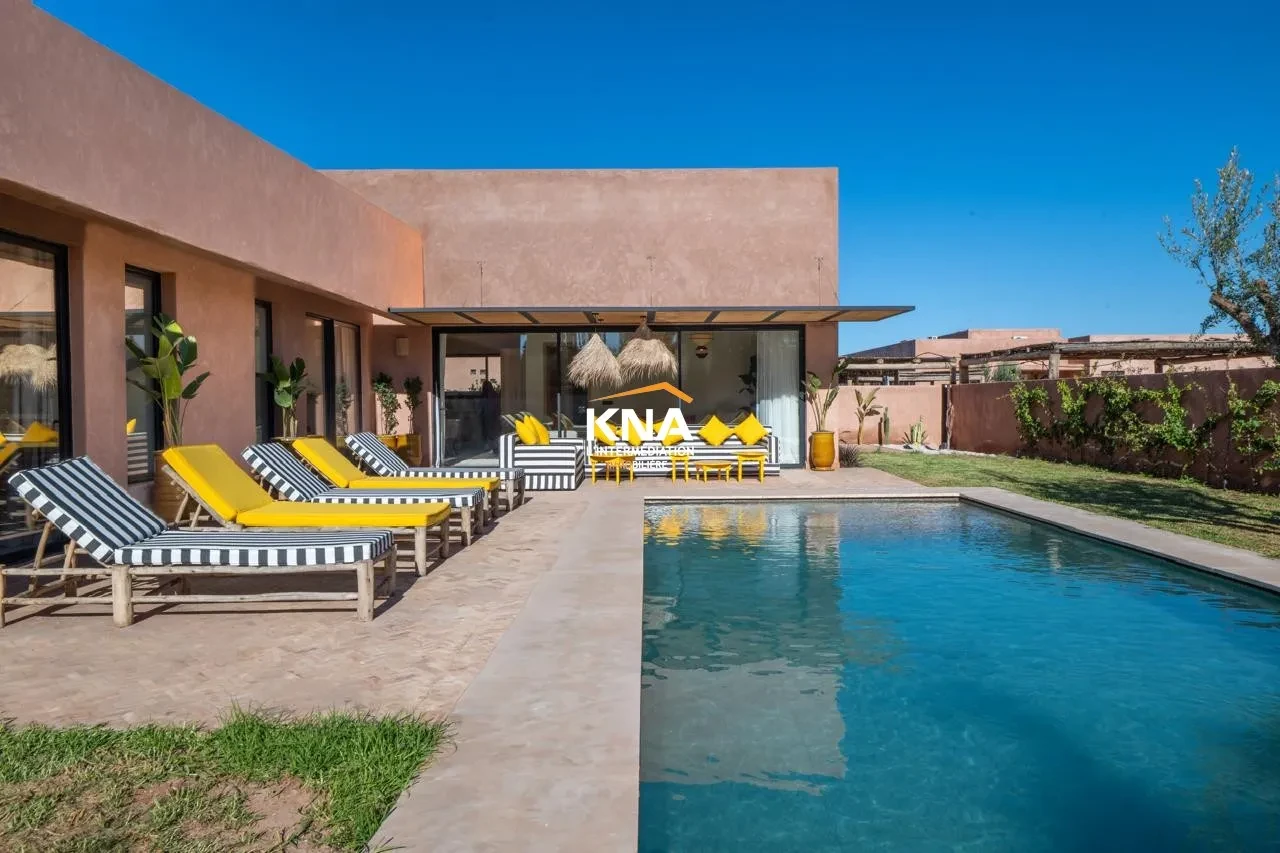
Booking luxury pool villas Marrakech is the gold standard for sophisticated travelers who prioritize total privacy, bespoke hospitality, and high-end security for their families or groups. Unlike the standardized luxury of international hotel chains, a luxury pool villas Marrakech offers an immersive experience into the Moroccan "Art de Vivre." Whether you are organizing a multi-generational family reunion, a private celebration, or an executive retreat, these estates provide the space and service necessary to create a seamless stay. At Agence KNA, we believe that a true luxury pool villas Marrakech is not just a property; it is a meticulously managed ecosystem where architecture, sun orientation, and professional house staff converge to offer you an unparalleled private oasis in the heart of the Red City.
H2: Why a Luxury Villa with Private Pool in Marrakech is the Ultimate Choice?
When you choose a luxury villa with private pool in Marrakech, you are choosing freedom over formality. For large groups and families, the traditional hotel model often feels fragmented. In contrast, a villa centralizes your experience.
Total Privacy vs. Resort Crowds
The primary motivation for seeking luxury pool villas Marrakech is the desire for seclusion. In a high-end villa, the pool is yours and yours alone. There are no dawn races to reserve sunbeds and no shared lounges. For families, this means children can play freely, and for groups, it means private conversations stay private. This "secluded luxury" is what defines the most prestigious properties in our luxury collection.
Bespoke Service: The Agence KNA Standard
Expertise in the Marrakech market reveals that the "hardware" (the villa) is only half of the equation. The "software" (the service) is what makes a stay memorable. A premium luxury pool villas Marrakech comes with a dedicated house staff, usually including a butler, a chef, and housekeeping. At Agence KNA, we emphasize that true luxury lies in the "discreet presence", staff who are invisible when you want intimacy but present the moment you need a fresh mint tea or a poolside cocktail.
H2: Selecting the Right Location: Beyond the Tourist Traps
Marrakech is a mosaic of micro-climates and atmospheres. Where you book your luxury pool villas Marrakech will dictate the soul of your holiday.
The Palmeraie: Timeless Grandeur
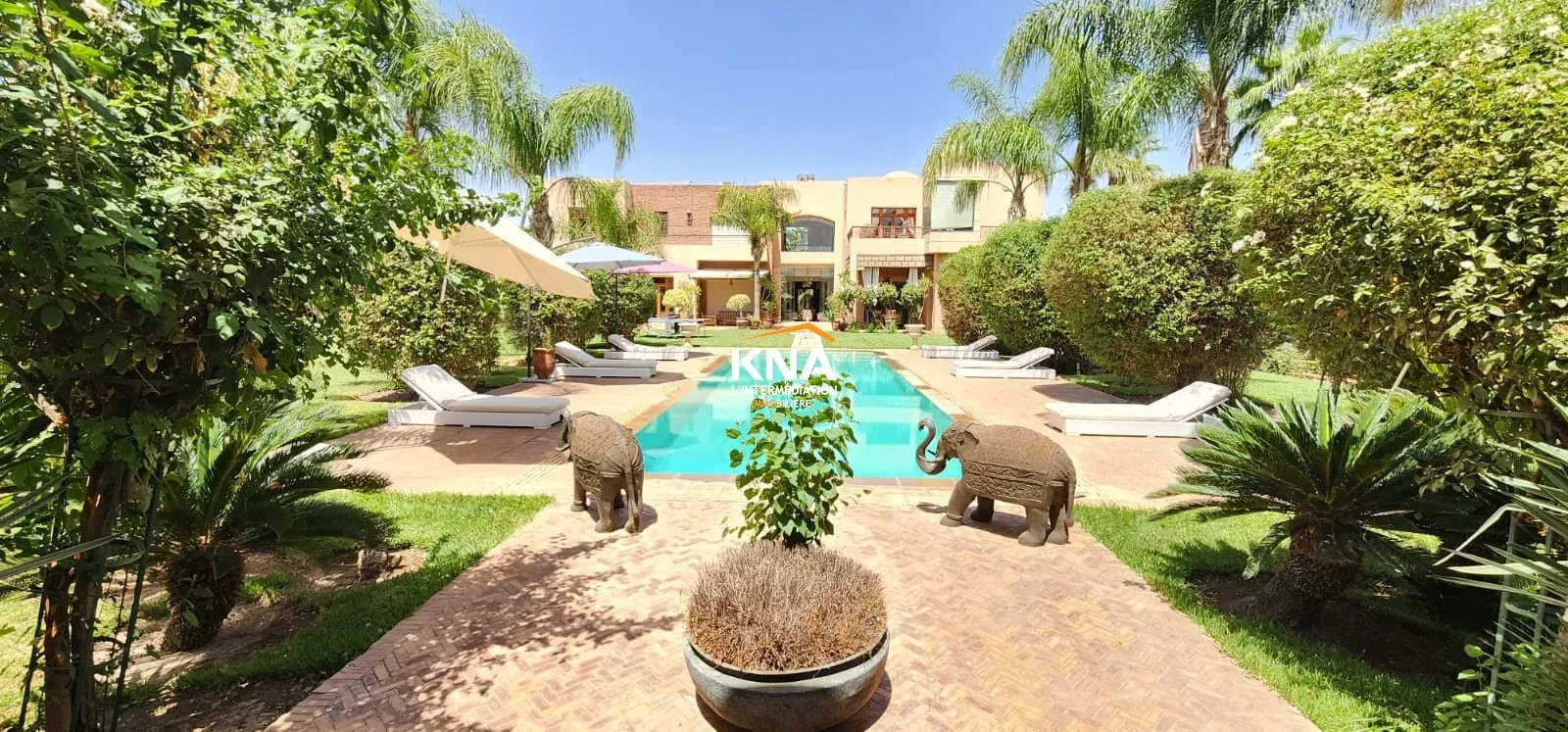
If you dream of thousands of palm trees and vast, rose-filled gardens, the Palmeraie is your destination. This area hosts some of the most iconic luxury pool villas Marrakech. Properties here, such as those on the Bab Atlas road, offer massive acreage, perfect for groups who want a "resort-style villa" feel without the public.
Amelkis and Royal Palm: Gated Security and Golf
For groups that value security and modern amenities, the golf resorts are unrivaled. Booking a villa in Amelkis provides a gated community environment with 24/7 security. These luxury pool villas Marrakech are often architectural masterpieces, blending contemporary lines with traditional Moroccan materials like tadelakt and zellige.
The "Deep" Ourika: For Those Seeking Silence
For travelers who find the city center too frantic, the Route de l’Ourika offers a cooler climate and breathtaking views of the Atlas Mountains. A luxury pool villas Marrakech in this area often feels more "Beldi-chic", a rustic yet refined elegance that suits families looking for nature-based activities and pure serenity.
H2: Technical Expertise: What Most Agencies Forget to Tell You
At Agence KNA, our expertise goes beyond the aesthetic. We analyze the technical specs that ensure your luxury pool villas Marrakech functions as a true sanctuary.
The Solar Orientation Factor
This is the most common mistake made by non-experts. Because Marrakech can have cool evenings in the winter, the orientation of your pool is critical. A luxury pool villas Marrakech with a North-facing pool will stay in the shade most of the day, making the water uncomfortably cold and the terrace gloomy. We always recommend properties with a South or South-West orientation to maximize the Moroccan sun and ensure your poolside dining experience is bathed in golden light until sunset.
Pool Heating and Technical Reliability
A "heated pool" is a must from October to May. However, not all heating systems are equal. An expert-level luxury pool villas Marrakech should be equipped with a high-performance heat pump (PAC) and, ideally, a thermal cover to retain heat overnight. Without a cover, the desert night air will strip the heat from the water, regardless of how long the pump runs.
H2: Planning Private Celebrations and Family Reunions
Marrakech has become a global hub for private events. If you are renting luxury pool villas Marrakech for a birthday, anniversary, or a small wedding, the layout of the property is paramount.
The Importance of Outdoor Dining and Sun Decks
For a successful group event, you need a villa designed for "alfresco" living. Look for luxury pool villas Marrakech that feature expansive terraces and professional outdoor kitchens. A property with a large sun deck allows your group to transition seamlessly from a day of sun-soaking to an evening of celebration.
Staffing for Large Groups
A group of 12 to 15 guests requires more than just a cook. At Agence KNA, we advise our clients to verify the staff-to-guest ratio. A high-end luxury pool villas Marrakech should provide enough personnel to ensure that service never feels rushed. This includes a private chef capable of producing complex Moroccan cuisine and a villa manager to coordinate logistics like airport transfers and desert excursions.
H2: Essential Amenities for a High-End Marrakech Stay
When comparing luxury pool villas Marrakech, look for these specific amenities that elevate the experience from "good" to "extraordinary":
Private Hammams and Spas: No Moroccan stay is complete without a traditional scrub. Many of our premium villas include a private hammam and a dedicated treatment room.
Cinema Rooms and Games Hubs: Essential for families with teenagers or groups looking for evening entertainment within the villa.
High-Speed Fiber Optic: Even on holiday, connectivity is vital. We ensure our luxury pool villas Marrakech are equipped with the latest Wi-Fi technology.
H2: From Rental to Investment: The Agence KNA Perspective
Many of our clients begin as vacationers in luxury pool villas Marrakech and end as investors. The Marrakech real estate market offers a unique opportunity for "lifestyle investments."
The Lucrative Potential of a Luxury Villa
Buying a villa in Marrakech is a strategic move. The demand for luxury pool villas Marrakech is year-round, fueled by European travelers in winter and Middle Eastern travelers in summer. Properties with the "VNA" (Vocation Non Agricole) status are particularly prized by international buyers.
Strategic Locations for Value
If you are looking to move from renting to owning, consider the Route de Casablanca or the Targa district for long-term appreciation. For immediate rental yield, the Amelkis area remains the gold standard for luxury pool villas Marrakech.
H2: FAQ: Your Questions Answered by Agence KNA Professionals
What is the best time of year to book luxury pool villas Marrakech?
Marrakech is a 365-day destination. However, for a "summer stay" vibe, May, June, and September are ideal. If you seek "winter sun," January and February are beautiful, provided your villa has a heated pool.
Are the villas suitable for guests with reduced mobility?
Many modern luxury pool villas Marrakech are built on a single level, making them very accessible. However, always confirm the specific layout with our team before booking.
How does the food service work in a luxury villa?
Typically, you provide the "grocery kitty," and the chef handles the shopping and preparation. This allows you to enjoy five-star Moroccan gastronomy at local market prices, offering much better value than any hotel.
Can Agence KNA help with long-term rentals?
Absolutely. While many seek short stays, we also specialize in long-term villa rentals for those looking to relocate or spend a full season in the city.
14 July 2026
Marrakech villas with private pool: Your Ultimate Guide to an Exclusive Getaway
Marrakech, the crown jewel of Moroccan tourism, offers a unique blend of vibrant souks, historic palaces, and high-end living. For the discerning traveler, choosing Marrakech villas with private pool is not just about accommodation, it is about securing a sanctuary of peace and luxury. Whether you are planning a romantic escape, a multi-generational reunion, or a retreat with friends, having your own basin under the North African sun elevates your holiday to a new level of sophistication. Our boutique agency specializes in hand-picking properties that define excellence, ensuring that your private pool villa Marrakech experience remains unrivaled in comfort and seclusion.
Why a Marrakech villas with private pool is the Gold Standard for Luxury
The climate in the "Red City" features sun-drenched summers and mild winters, making a water feature an absolute necessity. Selecting from the finest Marrakech villas with private pool guarantees a level of freedom that hotels simply cannot replicate. You no longer need to navigate the crowds at a resort pool or adhere to restricted swimming hours.
The Importance of Pool Privacy
In luxury travel, true exclusivity is defined by pool privacy. Our clients prioritize properties that are "sans vis-à-vis," meaning they are not overlooked by neighbors or passersby. A luxury pool villa should feel like a private fortress of relaxation. We meticulously inspect every estate to ensure that the orientation of the swimming area and the height of the garden walls provide total 100% seclusion. This allows you to enjoy your villa terrace and pool in complete intimacy, day or night.
Garden Villa Marrakech: Merging Nature with Water
A premier Marrakech villas with private pool is never just about the concrete and water; it is about the surrounding landscape. A lush garden villa Marrakech creates a natural microclimate of freshness. Imagine swimming surrounded by century-old olive trees, fragrant orange blossoms, and vibrant bougainvillea. These green spaces act as a natural buffer, enhancing the sense of peace and providing shaded areas for lounging between dips.
Key Features of a Luxury Pool Villa
True luxury lies in the details. When browsing for your next summer villa Morocco, look for specific technical and aesthetic features that differentiate a standard house from a world-class estate.
Understanding Swimming Pool Size and Design
Unlike generic hotel pools, the swimming pool size in our private villas often exceeds expectations. Whether you prefer a long lap pool for morning exercise or an infinity-edge design that mirrors the Atlas Mountains, the dimensions matter. A larger swimming pool size allows for a more versatile experience, accommodating both playful children and serious swimmers. We offer detailed specifications for every private pool villa Marrakech in our catalog so you can choose the one that fits your lifestyle.
Pool Heating for Year-Round Enjoyment
To maximize the value of your Marrakech villas with private pool, we highly recommend selecting a property with pool heating. While the sun is strong, the water temperature can drop during the cooler months (October to April). A high-performance heating system ensures your pool remains at a perfect 28°C (82°F) regardless of the season. This feature transforms your summer villa Morocco into a year-round destination, perfect for a crisp winter morning swim.
The Perfect Setup: Sun Loungers and Pool Houses
The area surrounding the water is just as vital as the water itself. High-quality sun loungers with plush cushions are essential for those afternoon siestas. Furthermore, many of our luxury pool villa options include a dedicated pool house. This structure serves as an outdoor living room, often equipped with a bar, a summer kitchen, or even a fireplace. It becomes the heart of your outdoor life, allowing you to move seamlessly from the water to the shade.
Where to Find the Best Private Pool Villa Marrakech
Marrakech offers several distinct neighborhoods, each providing a different atmosphere for your stay.
The Palmeraie: This is the historic heart of luxury. A rent villa Marrakech Palmeraie stay places you in an oasis of thousands of palms, where estates are spread across hectares of land.
Amelkis and Golf Resorts: Ideal for those who love modern architecture and sports. Our rent villa Marrakech Amelkis options often feature sleek designs and proximity to world-class fairways.
Route d'Amizmiz: Perfect for travelers seeking contemporary villas with dramatic views. Explore our rent villa Marrakech Route Amizmiz for stunning infinity pools facing the mountains.
Regardless of the location, every Marrakech villas with private pool we represent ensures quick access to the city center while maintaining a tranquil environment.
Safety and Services: Essential Standards for Families
Managing a luxury pool requires expertise and constant attention. When you book a Marrakech villas with private pool through our agency, you benefit from professional oversight and high-end services.
Family Pool Safety: Peace of Mind for Parents
For those planning a family stay, the safety of young children is our top priority. Not all pools are naturally safe for toddlers, which is why we emphasize family pool safety. We select villas that can be equipped with removable safety fences, pool alarms, or rigid covers. Please inform us of your children's ages when booking your Marrakech villas with private pool so we can ensure the necessary precautions are in place before your arrival.
Professional Maintenance and Concierge Services
A luxury pool villa requires pristine water quality. Our service includes a discreet professional who visits regularly to manage pH levels, cleaning, and heating systems. Additionally, our concierge can arrange for a private lifeguard or swimming instructor for your summer villa Morocco stay. While you relax on your villa terrace, our team works behind the scenes to ensure every technical aspect of your pool is perfect.
Organize a Tailor-Made Stay
Marrakech is a family-friendly destination where your private pool villa Marrakech serves as the ultimate base. While the kids enjoy the freedom of a garden villa Marrakech, parents can indulge in on-site spa treatments or a private dinner served on the villa terrace.
Our concierge team goes beyond the basics. We can organize a private chef to prepare a poolside barbecue, a yoga instructor for sunrise sessions by the water, or a specialized nanny to assist during your family stay. Your Marrakech villas with private pool experience is limited only by your imagination.
From Rental to Ownership: Investing in Marrakech
The high demand for Marrakech villas with private pool makes the city an attractive market for investors. Many of our clients who start with a holiday rental eventually look into sale villa Marrakech opportunities. Owning a property with a private pool and high-end amenities is a strategic move, offering both a personal holiday home and a significant rental yield. Whether you are interested in an apartment in Hivernage or a grand estate, our team of experts provides the guidance needed for a successful transaction.
FAQ: Everything You Need to Know
What is the average swimming pool size in your villas?
Most of our Marrakech villas with private pool feature basins ranging from 10 to 15 meters in length. Some grand estates offer Olympic-sized pools for serious swimmers.
Is pool heating included in the price?
In most cases, pool heating is an optional extra due to the high energy costs. We recommend requesting this feature at least 48 hours before arrival so the water reaches the perfect temperature for your first dip in your private pool villa Marrakech.
Can we have a "halal-friendly" pool with total pool privacy?
Yes. A significant portion of our portfolio focuses on pool privacy with high walls and no overlooking windows, specifically catering to families who require absolute discretion for cultural or personal reasons.
What services are provided for a summer villa Morocco?
Every Marrakech villas with private pool rental includes daily maintenance, towel service, and a 24/7 concierge to handle any requests during your stay.
Conclusion: Book Your Dream Moroccan Retreat
The allure of Marrakech villas with private pool lies in the combination of Moroccan charm and international luxury standards. It offers the ultimate escape where you can enjoy a lush garden villa Marrakech, a spacious villa terrace, and the refreshing joy of a private pool villa Marrakech all to yourself.
Our real estate agency is committed to finding the "hidden gem" that fits your specific needs. Do not settle for average when you can experience the extraordinary. Contact us today to explore our exclusive collection of Marrakech villas with private pool and start planning your perfect getaway.
14 July 2026
To effectively avoid holiday rental scams in Morocco in 2026, you must verify the property’s official tourist classification (license), insist on a written short-term lease agreement, and only perform transactions through traceable professional bank accounts. As digital fraud becomes more sophisticated with AI-generated listings, booking through a reputable, licensed real estate agency remains the only absolute guarantee to protect your funds. This security protocol outlines the mandatory steps to booking luxury real estate in Marrakech with total confidence.
Emergent Fraudulent Tactics to Monitor in 2026
The booming Moroccan tourism sector attracts cyber-criminals who now use advanced technology to deceive travelers. Spotting holiday rental scams in Morocco requires a high level of digital vigilance and attention to detail.
Social Media Deception and Deepfakes
In 2026, scammers no longer rely on simple stolen photos. They deploy automated Instagram or TikTok accounts that showcase high-end villas using AI-generated videos or footage hijacked from international luxury listings. These "bait" advertisements often feature prices 50% lower than the actual market rate for a villa with a pool in Marrakech. The fraudster typically creates a false sense of urgency, claiming a "last-minute cancellation" to pressure you into a swift wire transfer before you can verify the property’s existence.
Professional Identity Theft and Mirror Sites
A highly sophisticated method involves cloning the websites of established agencies. Scammers purchase domain names that are nearly identical to the original (e.g., kna-marrakech-rentals.com instead of agencekna.com). They intercept your inquiries and provide personal bank details for the deposit. Always verify the security certificate (HTTPS) and ensure you are communicating with the official office, such as the Agence KNA in Hivernage.
Legal Proof and Mandatory Documentation
Moroccan legislation protects seasonal tenants, but only if they demand the official documents required by the national decree (Dahir). Never consider a booking valid without the following elements.
The Official Tourist Classification Number
In Morocco, every riad or villa intended for short-term rental must be registered with the Ministry of Tourism. This classification ensures the property meets strict safety (fire, electrical), hygiene, and comfort standards. Any host or platform unable to provide an operating license or classification number should be immediately flagged as a potential instance of holiday rental scams in Morocco.
The Short-Term Lease Contract
A formal contract is your primary legal shield. It must explicitly state:
The full legal identity of the owner or the authorized agent (verifiable via a business registry or ID copy).
A precise description of the property and its working amenities (Air conditioning, pool heating).
Clear terms for the down payment and the security deposit refund policy.
A legitimate professional will never bypass the contract stage. If your contact evades this requirement, terminate the negotiation instantly.
Why a Licensed Real Estate Agency is Your Best Shield
Choosing a local professional intermediary is the most strategic investment you can make to secure your vacation. The agency serves as a trusted third party, mediating between the landlord and the tenant.
Physical Asset Verification and Compliance
The core strength of a firm like KNA is "on-the-ground" verification. We physically inspect every listed property before it appears on our portal. This process confirms that the villa exists, is in prime condition, and matches the promotional photography. Such rigorous control eliminates the risk of arriving at a "ghost property," a classic hallmark of holiday rental scams in Morocco.
Financial Security and Mediation Services
When you book through a licensed agency, your funds are held in professional, regulated Moroccan bank accounts. Typically, the balance is only released to the owner after your successful check-in. In the event of a major technical failure (e.g., total AC failure or an unusable pool), the agency holds the financial leverage to demand immediate repairs or provide an equivalent relocation, such as a villa on the Ourika Road.
A Digital Security Protocol for Savvy Travelers
Before you confirm any seasonal rental in the Kingdom, apply this rigorous verification checklist:
Reverse Image Search (Google Lens): Upload the property photos to Google. If the same villa is listed under different names in Marrakech, Marbella, and Mykonos, you are witnessing a scam.
Mandatory Live Video Call: Ask the host for a five-minute live virtual tour via WhatsApp. A scammer will invariably invent excuses—such as poor connectivity or being out of town—to avoid this reality test.
Cross-Reference Reviews: Do not rely solely on testimonials found on the host's own site. Search for the property or agency name on independent third-party platforms.
Check the Official Source: Use only the official contact form to initiate your booking.
Legal Recourse and Competent Authorities
If, despite your precautions, you fall victim to a fraudulent scheme, Morocco provides dedicated legal structures to assist you.
The Tourist Police (Brigade Touristique)
Located in all major hubs like Marrakech, Casablanca, and Agadir, the Tourist Police are highly efficient and specifically trained to handle holiday rental scams in Morocco. They are multilingual and can act swiftly to document the fraud and initiate legal proceedings against the perpetrators.
The Legal Framework and Expert Advice
Moroccan law strictly penalizes real estate fraud. To stay informed about new regulations and safety updates, we recommend regularly visiting our real estate blog. Knowledge of the local market remains your most powerful defense against bad actors.
FAQ: Frequently Asked Questions on Rental Safety
Should I pay the full amount before arrival?
The standard practice is a down payment (30% to 50%) to secure the dates. The balance is usually settled upon arrival and key handover. Anyone demanding 100% upfront via untraceable services (like Western Union) is highly suspicious.
How do I verify if an agency is legal in Morocco?
Request their Patent number, Commercial Registry number (RC), and their physical office address. A legitimate agency always has a brick-and-mortar office where you can meet their team.
What should I do if the villa doesn't match the photos?
If you booked via a licensed agency, contact them immediately. They are legally obligated to provide a solution or a refund based on the breach of contract.
Conclusion
Securing your 2026 vacation requires a combination of common sense and digital scrutiny. By rejecting "too-good-to-be-true" offers, demanding legal documentation, and utilizing recognized local experts, you effectively neutralize the risks of holiday rental scams in Morocco. Agence KNA is committed to providing a transparent and secure window into the Moroccan property market. Your safety and comfort are our absolute priorities. Please contact us for any verification needs or to explore our curated selection of certified luxury villas.
22 June 2026
Choosing a Villa with Pool Marrakech 2026
To understand how to choose a villa with a pool in Marrakech for this summer 2026, you must prioritize three technical pillars: a bioclimatic orientation that avoids pure southern exposure for the water, a mature natural canopy for organic cooling, and state-of-the-art climate systems (Inverter AC and high-pressure misting). With record temperatures expected this July, your selection should not rely on aesthetics alone, but on thermal comfort engineering. This manual navigates you through the essential parameters to ensure your luxury villa rental in Marrakech becomes a refreshing sanctuary, capable of maintaining a serene environment even when external temperatures hit 42°C (108°F).
Pool Orientation: The Primary Pillar for Your Selection
Sunlight physics is the most critical factor when determining how to choose a villa with a pool in Marrakech. Poor exposure can turn your swimming pool into a stagnant heat source, making bathing uncomfortable during peak afternoon hours.
Avoiding Pure Southern Exposure in July
Unlike winter stays where maximum sunlight is desired, Summer 2026 requires careful management of the solar azimuth. A pool facing due south captures vertical radiation from noon until dusk, causing water temperatures to climb above 33°C (91°F), which negates the refreshing effect. For optimal cooling, look for a South-West or Eastern orientation. This allows you to enjoy morning light while benefiting from the building’s projected shadow starting at 3:00 PM.
Shielding from the Chergui Wind
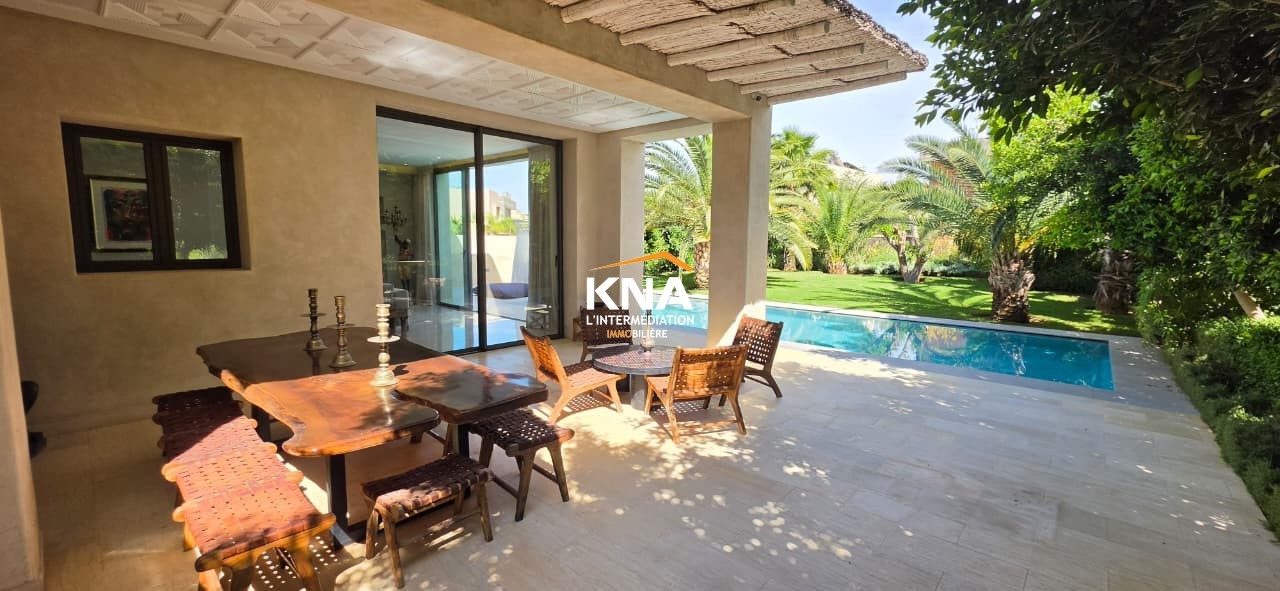
The Chergui, a scorching wind from the Sahara, accelerates evaporation and overheats exposed water surfaces. When evaluating villas with a pool in Marrakech, check if the basin is protected by thick boundary walls or dense cypress hedges, typical of estates in the Palmeraie. These natural barriers stabilize the microclimate and preserve water freshness.
Natural Shade: The Power of the Green Canopy
A well-designed garden acts as a biological air conditioner. It is a decisive element in knowing how to choose a villa with a pool in Marrakech without relying solely on electrical energy.
Beldi Garden Density and Evapotranspiration
The presence of well-irrigated lawns and mature trees (olive, palm, citrus) reduces the ambient temperature by 5 to 8 degrees through evapotranspiration. During your selection process, examine the maturity of the vegetation. Villas located on the Ourika Road often offer denser gardens, creating pockets of cool air essential for outdoor lunches.
Bioclimatic Pergolas and High-Pressure Misting
In 2026, luxury standards systematically include pergolas covered in jasmine or dense bougainvillea. For total comfort, verify that the villa features a high-pressure misting system (not low-pressure). This technology transforms water into an ultra-fine mist that evaporates instantly, absorbing heat from the air without wetting textiles. It is the perfect complement to your villa rental on the Amizmiz Road.
Insulation and Thermal Inertia: Indoor Comfort
Knowing how to choose a villa with a pool in Marrakech also means ensuring the interior architecture protects your sleep and relaxation moments.
Traditional Materials and Double-Wall Construction
Premier Moroccan architecture utilizes "pisé" (rammed earth) or double-wall structures to trap the night's coolness. Inside, floors made of "bejmat" (handcrafted terracotta) or artisanal "zellige" have slow thermal conductivity: they remain cold underfoot, providing immediate relief after sun exposure.
Inverter Air Conditioning and Smart Home Integration
Ensure the air conditioning is an "Inverter" type. This system is quieter and provides constant cooling without freezing drafts. The best villas with a pool in Marrakech in 2026 now integrate smart home management, allowing you to pre-cool your suites before returning from an excursion, guaranteeing a crisp 23°C (73°F) upon arrival.
Water Technology: Filtration and Purity
Crystal-clear water is not just aesthetic; it is technically cooler. Water loaded with particles absorbs more heat.
Variable Speed Pumps
High-standing properties, particularly in Amelkis, use variable-speed filtration pumps. They ensure continuous circulation of the water volume, preventing the formation of a warm surface layer. Constant mixing maintains a balanced pH between 7.2 and 7.4, ensuring a healthy swim for sun-dried skin.
H3: Professional Upkeep and Maintenance
The daily visit of a qualified pool technician is a non-negotiable condition. They must check the chemical balance every morning before 9:00 AM. A rigorous real estate agency, such as Agence KNA, systematically validates these maintenance contracts before listing a property for rent.
Technical Verification Protocol Before Booking for July 2026
Use this technical checklist to validate your final choice:
Inverter System: Silent air conditioning in all bedrooms.
Orientation: Does the pool receive shade after 4:00 PM?
Amenities: Weighted umbrellas and garden furniture made of non-heat-conductive materials.
Safety: Protective barriers or compliant alarms for children.
Expert Advice: If you are seeking a natural alternative to the heat of the plains, consult our Ourika Valley analysis to discover high-altitude villas. To secure your payment and data, read our manual on how to avoid holiday rental scams in Morocco.
FAQ: Your Questions About Renting a Villa in Marrakech
What is the ideal water temperature in summer?
For a bracing effect under 40°C, water between 26°C and 28°C is perfect. Above 30°C, it no longer cools the body effectively.
Are villas in gated communities cooler?
Often yes, as they benefit from shared irrigation of vast green spaces, which increases the overall hygrometry of the area.
How can I ensure pool compliance?
Ask if the basin has a certificate of compliance with the hygiene standards in force for 2026.
Conclusion
Mastering how to choose a villa with a pool in Marrakech requires high standards and anticipation. By prioritizing bioclimatic orientation, garden quality, and high-performance technical equipment, you guarantee your family a 2026 summer defined by luxury and serenity. Agence KNA selects only properties that meet these thermal comfort standards. Whether you prefer the calm of the Ouarzazate Road or the prestige of Hivernage, we accompany you in finding the perfect setting for your holidays. Do not hesitate to contact us for a personalized selection.

25 May 2026
Notary Fees in Morocco: The 2025 Comprehensive Guide for Your Real Estate Purchase
Are you planning a real estate purchase in Morocco? Whether it is a luxury villa in Marrakech, a modern apartment in Casablanca, or a titled plot of land, successful investment depends on rigorous financial planning. Beyond the sale price, you must accurately anticipate the notary fees in Morocco.
These fees generally oscillate between 7% and 10% of the property value. They do not merely represent the notary's salary; they primarily cover government taxes required to secure your title deed. This guide provides everything you need to know to buy with total peace of mind.
Why Is a Notary Essential for Your Real Estate Purchase in Morocco?
The notary acts as the pillar of legal security. Unlike a simple private agreement, the intervention of a notary authenticates the transaction and protects your interests against any risk of litigation or land despoliation.
A Mission of Verification and Advice
From the moment the preliminary contract (compromis de vente) is signed, the notary consults the ANCFCC (Land Registry) to obtain a recent property certificate. They verify the absence of mortgages, seizures, or charges on the property. Simultaneously, they ensure strict fiscal compliance by verifying that the seller has paid all local taxes.
In this regard, it is essential to understand that owning property entails recurring obligations. To better anticipate your future annual charges, consult our guide on Housing Tax (TH) and Communal Service Tax (TSC) in Morocco.
Detailed Breakdown of Notary Fees in Morocco in 2025
For a real estate purchase in Morocco, the total amount of fees is broken down into several regulated taxes and honoraria. Here are the current rates:
Registration Duties (4%): This tax is the largest portion. The notary collects and pays it directly to the General Tax Directorate (DGI).
Land Registry Fees (1.5% + 200 MAD): This amount funds the registration of your ownership in the land book and the issuance of your new title deed.
Notary Honoraria (Emoluments): The notary’s remuneration is governed by Decree No. 2-16-375 and follows a degressive scale:
Under 300,000 MAD: Fixed fee of 4,000 MAD.
From 300,001 to 1,000,000 MAD: 1.5%.
From 1,000,001 to 5,000,000 MAD: 1.25%.
VAT on Honoraria: A 10% tax applies specifically to the notary's remuneration.
Administrative Costs and Stamps: Budget between 2,000 and 3,500 MAD for various administrative formalities.
Example: For an apartment worth 1,000,000 MAD, expect to pay approximately 70,000 MAD in notary fees in Morocco.
Avoiding Pitfalls: Under-Declaration and Fiscal Impact
When making a real estate purchase in Morocco, some may be tempted by "under-declaration" (paying a portion "under the table") to reduce registration duties. This is a major strategic mistake.
The tax administration uses a price reference system. If your declared price is too low, you risk an immediate tax reassessment. Furthermore, an initial under-declaration will heavily impact your taxes when you decide to sell. You will artificially increase your capital gain, making it harder to benefit from a TPI exemption on a primary residence in Morocco. To sell without paying profit tax, every Dirham declared during the purchase counts.
Specific Cases: Land, Credit, and MRE Investors
The cost of your notary fees in Morocco adjusts according to the nature of the property:
Empty Land: Registration duties rise to 5%, as the state encourages construction.
Mortgages: If you take out a bank loan, you must pay mortgage registration fees (approximately 1% of the loan amount).
MRE & Foreign Investors: Always use a convertible Dirham account. This proves the origin of the funds and guarantees your right to repatriate your capital and profits in the future.
Practical Guide for Buyers
To ensure your transaction goes smoothly, follow these key steps:
Request a Quote: Before signing, ask your notary for a detailed provisional breakdown of costs.
Prepare Your Documents: ID, marital status, and proof of fund origin (especially for foreigners).
Use the Escrow Account: Never transfer funds directly to the seller. The notary secures the money in a professional account at the CDG (Caisse de Dépôt et de Gestion) until the final property transfer is confirmed.
FAQ: Frequently Asked Questions
Can the buyer choose the notary?
Yes, in Morocco, the buyer has the free choice of the notary, as they bear the financial burden of the deed and the associated taxes.
Are the fees negotiable?
State taxes (totaling 5.5%) are fixed and non-negotiable. A slight margin may exist for honoraria in very large transactions, provided the legal scale is respected.
Are notary fees in Morocco payable in installments?
No, the full amount of fees and taxes must be provided at the time of signing the final deed to allow for the immediate registration of the property.
18 May 2026
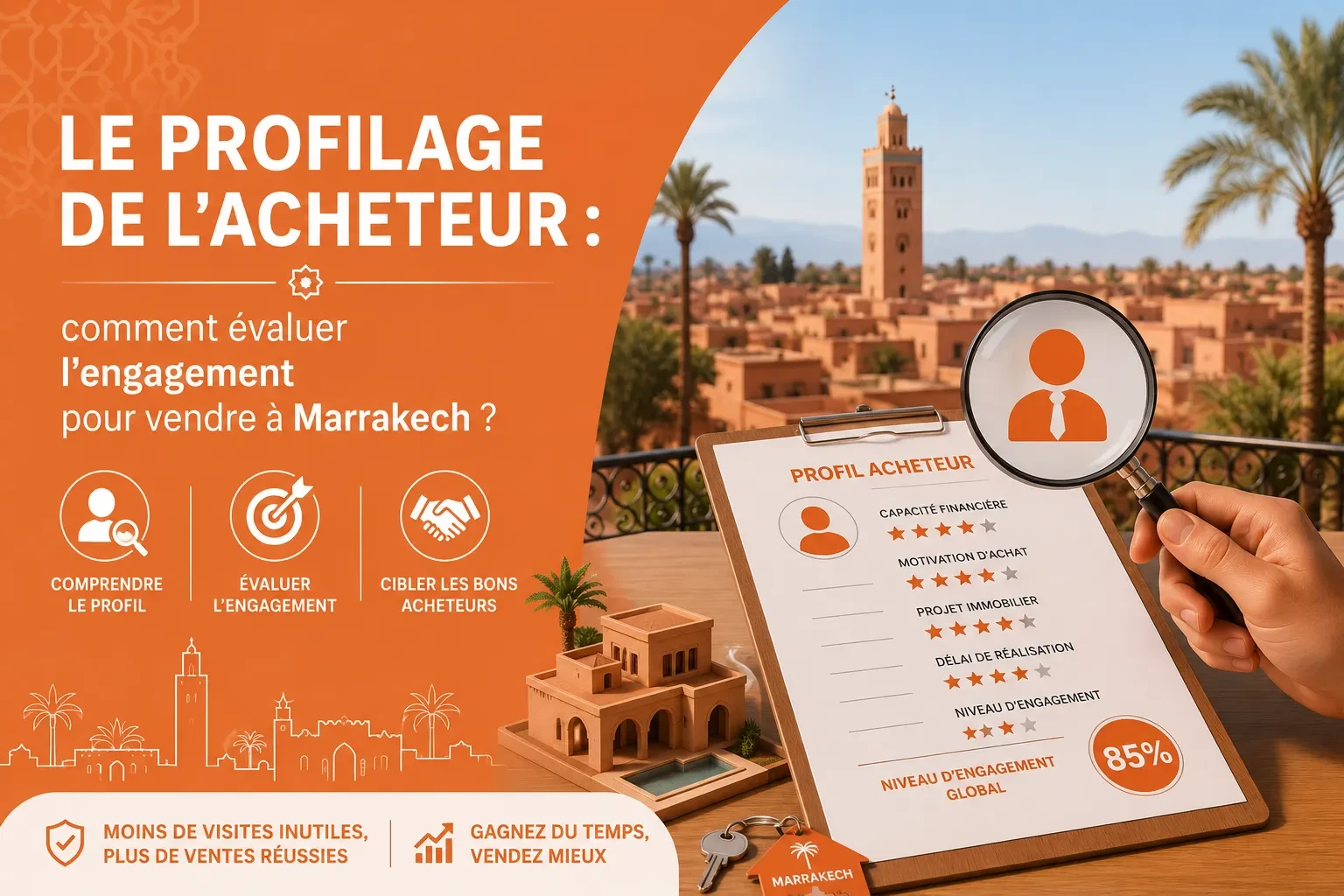
Buyer Profiling: How to Evaluate Real Engagement to Sell in Marrakech ?
In a market as dynamic as Marrakech, attracting visitors is easy, but identifying a true buyer requires specific expertise. Buyer profiling is not just about checking a budget; it’s about decoding the intention behind the visit. Between the "real estate tourist" seeking inspiration and the investor ready to sign, the difference lies in the maturity of their project. To succeed in your property transaction and secure your real estate sale in Marrakech, you must probe the psychology of your prospects.
Why buyer profiling is crucial for your sale
Selling a luxury riad or a villa is an emotional and time-consuming process. Effective buyer profiling allows you to optimize your schedule by prioritizing high-potential profiles. In Marrakech, many visitors start their search without an immediate intention to buy. They compare styles and neighborhoods, refining their criteria over several months.
By asking strategic questions, you determine buyer commitment from the very first meeting. A seller who does not filter calls risks wasting time on fruitless visits that slow down the actual sale. The goal is to distinguish the pragmatic "love at first sight" buyer from the indecisive curious visitor. To do this, always analyze the visitor's search journey.
Analyzing the maturity and time horizon of the real estate project
Timing is the best indicator of buyer commitment. A buyer who needs to move in within three months does not behave the same way as a prospect who is "just looking for next year."
Search history: A maturity indicator
Ask your visitor if they have already seen other similar properties. If they are just starting their search, they are likely in the discovery phase. However, if they have already visited five properties and are returning to yours, buyer profiling reveals a "hot" prospect capable of identifying your home's added value. This type of buyer knows market prices and will not waste time with unfounded negotiations.
Urgency and signature horizon
Determine if the buyer has a deadline (job transfer, sale of another property, school start). Buyer commitment is often proportional to the urgency of their situation. If their time horizon is vague, the risk of withdrawal before the final agreement increases.
Identifying decision-makers and strategic motivations
Buyer profiling also involves understanding the decision-making structure. In Marrakech, it is not uncommon for the visitor not to be the sole decision-maker.
Who validates the final offer?
Ask the question directly: "Are you the sole decision-maker, or does a partner/associate need to validate this choice?" Identifying the real decision-maker helps accelerate buyer commitment by quickly organizing a decisive second visit. This is one of the key questions to ask during a visit to avoid unnecessary back-and-forth.
Geographic motivation: Why this neighborhood?
Whether it’s Hivernage for its prestige or the Palmeraie for its tranquility, the motivation for a specific neighborhood says a lot about the project's seriousness. A buyer targeting a specific sector for its lifestyle or rental yield shows much higher buyer commitment than someone looking "anywhere in Marrakech." You can consult the Marrakech Regional Tourism Council to understand the attractiveness of different districts and adapt your sales pitch.
Conclusion: Turning a visit into a concrete offer
In conclusion, buyer profiling is a strategic filtering step that guarantees the success of your sale. By accurately assessing buyer commitment, you regain control over your transaction. Do not leave your heritage to chance. For professional support and precise targeting of your buyers, trust the expertise of Agence KNA.
FAQ: Profiling and Buyer Commitment
How to recognize a "real estate tourist"?
They ask few technical questions, have no clear time horizon, and seem more interested in the decoration than the property's structure.
Why is buyer commitment stronger after a second visit?
The second visit marks the transition from dream to reality. It is the moment the buyer checks practical details (privacy, noise, condition of plumbing).
Is buyer profiling intrusive?
No, it is perceived as proof of professionalism. A serious buyer appreciates discussing with a seller who knows the market and values their own time.
18 May 2026
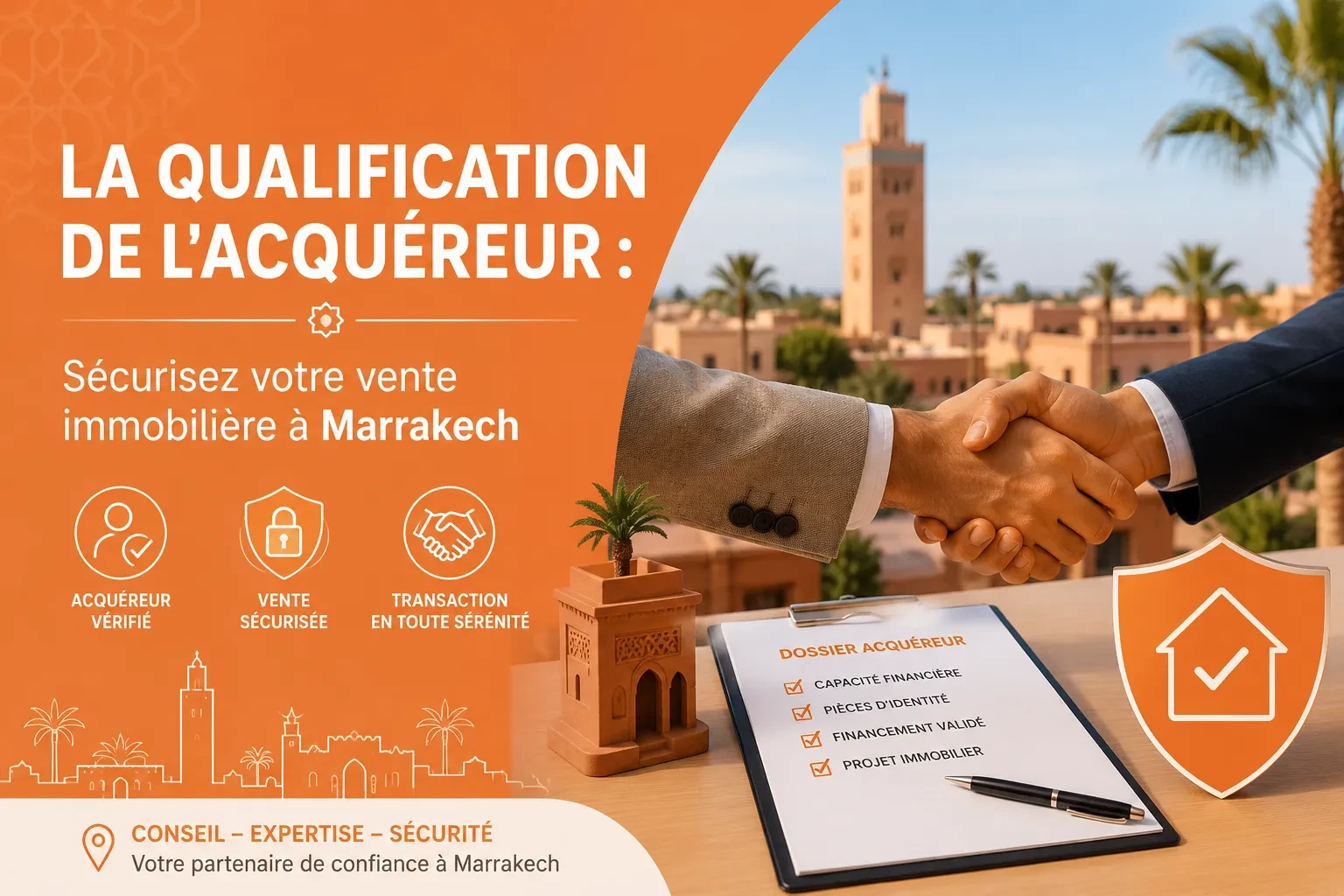
Buyer Qualification: How to Secure Your Real Estate Sale in Marrakech
Successfully managing a real estate sale in Marrakech requires much more than just showcasing the aesthetic appeal of your property. In the cosmopolitan context of the Moroccan market, buyer qualification has become an essential tool for the savvy seller. This strategic step allows you to filter profiles from the very first contact, ensuring you only retain viable leads. By adopting a rigorous methodology, you protect your time and guarantee a smooth transaction for your property project.
Buyer solvency: The first pillar of your security
Before committing to the costs of drafting a preliminary sales agreement (compromis de vente), you must imperatively validate the financial capacity of your visitor. Buyer solvency is not something to be assumed; it must be verified with tangible facts. In Marrakech, transaction timelines vary drastically depending on how the purchase is funded.
Start by identifying the financing method. If the acquirer is applying for a mortgage, systematically request a recent "agreement in principle" from their bank. This document proves the lender has already validated their borrowing capacity. In parallel, for a "cash" transaction, ask for a comfort letter or proof of funds. By verifying buyer solvency from the outset, you eliminate profiles that might unnecessarily block your property during the conditional period of a loan application.
Residency and Legislation: The legal aspect of buyer qualification
The Marrakech real estate market attracts investors from all over the world. This diversity involves specific administrative constraints that you must anticipate. Effective buyer qualification must include an examination of their residency status and their understanding of local laws.
The Office des Changes and currency transfers
If your buyer is a non-resident foreigner, they must strictly follow the rules of the Office des Changes regarding foreign investment. Ask them directly: "Is your currency transfer already organized?" A buyer who masters the capital repatriation circuit is a serious buyer. This legal detail is crucial for long-term buyer solvency, especially during the final signature at the notary's office.
Non-Agricultural Vocation (VNA): A major point of vigilance
For properties located in rural zones, such as certain villas in the Palmeraie or on the Ourika road, obtaining a "Non-Agricultural Vocation" (VNA) certificate is mandatory. Check if your buyer meets the criteria to acquire this type of property. Integrating this audit into your buyer qualification process prevents you from discovering a major administrative hurdle several months after signing the initial agreement.
Anticipating fees and expectations to avoid withdrawals
Sales often fail due to a poor assessment of closing costs. Just as an investor prepares for their property purchase with key questions, a seller must conduct their own audit. An ill-informed acquirer might try to renegotiate your net seller price at the last minute. Therefore, buyer qualification must also cover their knowledge of the actual fees involved.
Ensure the buyer has budgeted for notary fees and registration duties (approximately 7% in Morocco). Furthermore, immediately clarify their intentions regarding conditions precedent. Do they require specific renovations before the keys are handed over? Does buyer solvency depend on the sale of another asset? The more precise the answers you obtain, the more secure your transaction becomes.
Conclusion: Buyer qualification, the key to success
Do not leave the outcome of your transaction to chance. Buyer qualification is a proactive approach that adds value to your heritage. By asking the right questions regarding buyer solvency and anticipating the legal constraints of Marrakech, you turn a simple visit into a serene closing. To benefit from tailored support, trust the expertise of Agence KNA to filter your prospects and sell at the best price.
Everything you need to know about buyer qualification
Why is buyer qualification mandatory in Marrakech?
It secures the sale by ensuring the buyer has the necessary funds and complies with the specificities of Moroccan law (VNA, currency transfers).
How do I test the solvency of a foreign buyer?
Request a proof of funds or verify if they have a convertible Dirham account in Morocco to facilitate the operation.
Which documents prove buyer qualification?
A Letter of Intent (LOI) accompanied by a bank agreement in principle or a statement showing the availability of funds.
27 April 2026
Real Estate Sale in Marrakech: 8 Strategic Questions to Filter Potential Buyers
Succeeding in a real estate sale in Marrakech is about more than just opening the doors of your riad or villa to visitors. In such an attractive and cosmopolitan market, the major challenge for an owner is distinguishing "window shoppers" from serious buyers. Every visit should be viewed as a mutual audit. To protect your time and optimize your chances of closing at the best price, you must adopt a proactive stance.
Before signing a preliminary agreement, a savvy seller must conduct an investigation. Here are 8 essential questions to ask (or have your agent ask) to qualify a potential buyer and guarantee the success of your real estate sale in Marrakech.
1. How do you intend to finance the acquisition?
This is the priority question. In Marrakech, transaction timelines vary significantly depending on whether the buyer is paying cash or through a bank loan. If the buyer is seeking a mortgage, ask if they already have an agreement in principle. An unprepared financing file can block your property for two months only to end in a refusal. A secure transaction begins with financial transparency. For a precise study of your situation, do not hesitate to have your property valued to set a price consistent with market capacity.
2. Is the buyer a resident or non-resident in Morocco?
This distinction is crucial for a real estate sale in Marrakech. If the buyer is a non-resident foreigner, they must be informed of the Office des Changes (Exchange Office) rules regarding foreign currency transfers. For the seller, this also affects the management of documents such as the VNA (Non-Agricultural Vocation) if the property is in a rural zone. Knowing who you are dealing with allows you to anticipate administrative delays at the notary's office.
3. What is the timeline for the final signature?
Some buyers are in a hurry; others are waiting to sell another property before buying yours. Within the framework of a real estate sale in Marrakech, it is imperative to synchronize your calendars. If you are selling to buy elsewhere, a buyer who wants to sign in 15 days could put you in a difficult position. Conversely, a buyer asking for a six-month delay immobilizes your capital unnecessarily.
4. Has the buyer already visited other similar properties?
This question helps evaluate the maturity of the project. A buyer just starting their search is often indecisive. One who has already compared several products and returns to you is a "hot" prospect. They understand the prices practiced for real estate for sale Marrakech and can identify the added value of your property (finishes, location, tranquility).
5. Is the offer subject to any suspensive conditions?
Beyond the price, the conditions are the pillars of the offer. Does the buyer demand repairs before the keys are handed over? Do they want the furniture included in the transaction? By clarifying these points during the first oral offer, you avoid last-minute renegotiations during the drafting of the sales agreement. For professional support, you can choose to sell or rent your property through experts who will manage these filters for you.
6. Does the buyer understand the closing costs (Notary and Taxes)?
Many foreign buyers underestimate the acquisition costs in Morocco (approximately 7%). If the buyer has not included these fees in their global budget, they may attempt to lower your net seller price at the time of signing. Ensuring the buyer is well-advised by a professional or a notary is a mark of seriousness for your real estate sale in Marrakech.
7. Who is the final decision-maker in this project?
It is not uncommon to see an enthusiastic visitor who, ultimately, depends on the approval of a spouse remaining abroad or a business partner. Systematically ask if all stakeholders have validated the choice. Organizing a second visit quickly with the actual decision-maker is the best way not to waste time with intermediaries who lack decision-making power.
8. Why this specific neighborhood in Marrakech?
Whether it is Hivernage, Gueliz, or the Palmeraie, each neighborhood attracts a specific profile. Understanding the buyer's motivation (rental investment, primary residence, holiday home) allows you to adapt your sales pitch. An investor will be sensitive to yield, while a family will look for proximity to international schools. For maximum web visibility, use agencekna.com, the reference portal for exceptional real estate.
FAQ: Succeeding in Your Sale in Marrakech
What documents should I prepare for visits?
Always have a copy of the land title, the cadastral map, and the latest RADEEMA (utility) bills ready. This proves your seriousness and the transparency of your real estate sale in Marrakech.
How do I justify my price to a negotiating buyer?
Rely on professional expertise. Highlight the quality of materials, the lack of overlooked views, and the history of renovations. The value of a property is not limited to its surface area but its legal and technical compliance.
What is the impact of the Property Profit Tax (TPI)?
The seller must pay the TPI (typically 20% on the profit). Anticipating this cost allows you to know your "net seller" amount and set your negotiation margin with the buyer.
Conclusion:
By asking these 8 questions, you regain control of your real estate sale in Marrakech. Selling your heritage is a major step: do not leave it to chance. Rigor during the viewing phase is the best defense against legal and financial surprises.
20 April 2026
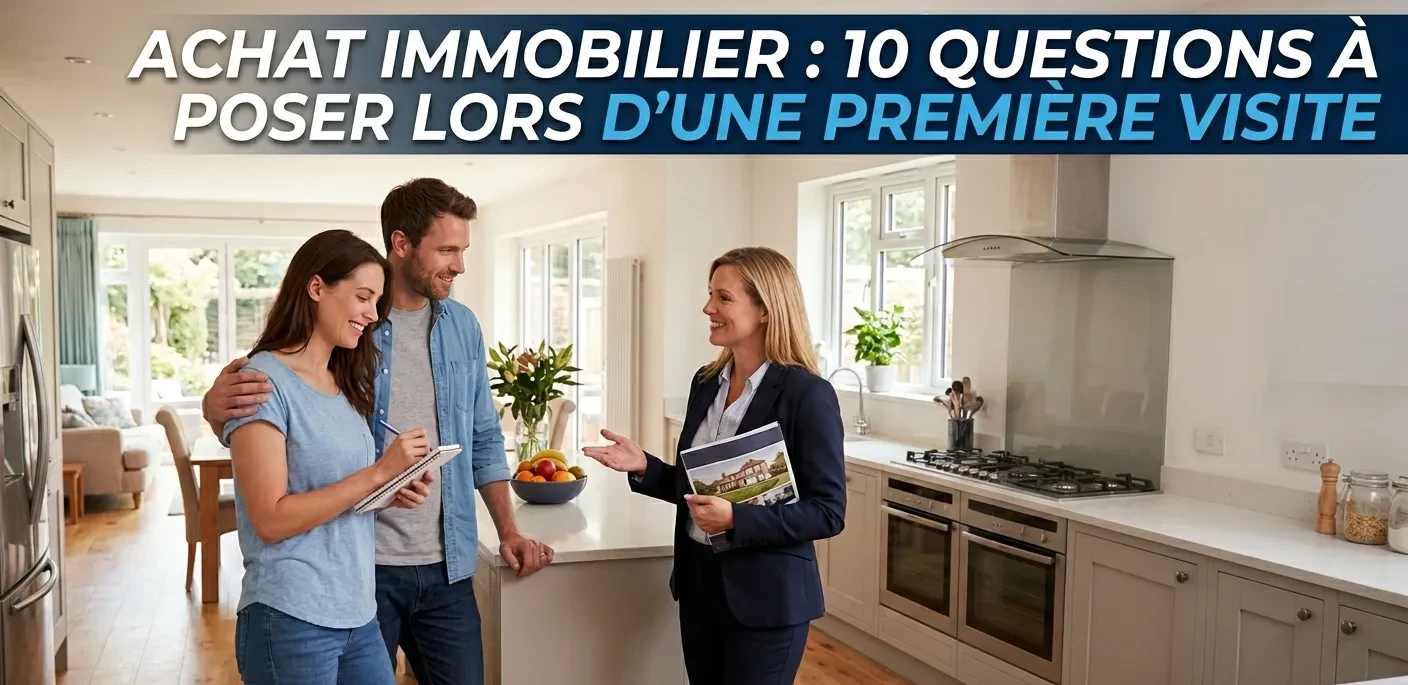
Property Purchase in Marrakech: 10 Questions to Ask During Your First Visit
Acquiring property in Marrakech is a financial operation that requires a rigorous analysis of local realities. While the market offers exceptional opportunities, the beauty of a terrace or the quality of a renovation should never overshadow technical and legal fundamentals. A successful visit is, above all, an audit that allows you to compare your expectations with the reality on the ground.
Before committing funds to your real estate project, the physical visit is the moment of truth. This is when you must detect potential flaws and ask the questions that will secure your investment for the long term.
Preparing Your Audit: The Importance of a Technical Checklist
In Marrakech, specific climatic conditions and the Moroccan legal framework impose a high level of vigilance. You are not just visiting a home; you are evaluating the viability of a land title and the resilience of a structure against the region's thermal amplitudes. To avoid unpleasant surprises after signing, you must structure your exchange with the seller or agent around specific points.
Here are the major questions to raise to validate the relevance of your property purchase.
Property Purchase: 10 Questions to Ask During Your First Visit
1. Does the property have a definitive and up-to-date Land Title (Titre Foncier)?
This is the non-negotiable starting point for any secure property purchase in Morocco. A "titled" property registered with the Land Registry (Conservation Foncière or Mouhafada) guarantees that ownership is indisputable. Systematically ask to see a recent property certificate to check for any mortgages or liens.
2. What is the status of the VNA (Non-Agricultural Status)?
For any foreign buyer whose real estate project is located in a rural area (villas on the outskirts), the VNA (Vocation Non Agricole) is indispensable. Ask if it has already been obtained definitively. Without this document, you cannot obtain the title deed in your name.
3. Does the Habitation Permit (Permis d'Habiter) match the current configuration?
Verify that all constructions (swimming pool, extension, additional floor) appear on the authorized plan. A discrepancy between the cadastral plan and reality can block your property purchase during the registration process at the notary's office.
4. What is the actual condition of the terrace waterproofing?
In Marrakech, extreme heat causes materials to expand, and torrential winter rains test structures. Ask the seller about the date of the last waterproofing work. Traces of moisture on the ceiling are immediate red flags.
5. How is the air conditioning system sized?
Thermal comfort is the primary energy expense. Is the system centralized or does it use split units? Ask for a demonstration to check the noise level and the cooling efficiency in every room.
6. Is the property connected to the RADEEMA network or a well?
Water management is crucial for the longevity of your real estate project. A compliant connection to the city network is preferable. If the property relies on a well (borehole), demand the official pumping authorization and inquire about the depth of the water table.
7. What is the exact amount of the HOA (Syndic) fees and their history?
A building or gated community without an active HOA (Syndic) deteriorates quickly. Ask if the charges are paid by all co-owners and if significant works have been voted on recently for the maintenance of common areas.
8. Are there any easements or upcoming urban planning projects nearby?
Consult the Urban Master Plan at the Urban Agency. An empty plot in front of your future villa could host a construction project that might obstruct your view and reduce the value of your property purchase.
9. How old are the electrical and plumbing installations?
In the Medina or older neighborhoods like Guéliz, networks can be outdated. Non-compliant electrical wiring is a major risk, especially with the heavy use of air conditioning during the summer.
10. What is the seller's actual motivation?
Understanding why the owner is leaving the property and how long it has been on the market gives you a strategic advantage. A sale period exceeding six months is often a sign of an overvalued price or a hidden technical defect.
Securing the Legal and Financial Transaction
Once these elements are validated, the success of your property purchase depends on the quality of the notarial support. The notary is the sole guarantor of the security of funds and the regularity of the registration at the Mouhafada. It is also recommended to study the local market psychology to refine your offer. To understand the selling mechanisms and optimize your negotiation, consult our analysis on property sales in Marrakech.
Taxation: Anticipating Recurring Costs
Your real estate project must include the habitation tax and the communal service tax (TSC). These taxes are calculated based on the rental value of the property. If you plan to rent out the property, inquire about the current tax regimes to optimize your net yield.
Conclusion: Turning the Visit into an Informed Decision
A property purchase in Marrakech should never be impulsive. By asking these 10 questions, you move from being a visitor to an informed buyer. Take the time to compare the answers with official documents. Technical rigor is the only effective barrier against the unexpected and the guarantee that your real estate project will remain a valuable asset over time.
SEO FAQ: Key Questions for Your Investment
What are the notary fees for a property purchase in Morocco?
Expect to pay approximately 7% of the purchase price. This includes 4% registration duty, 1.5% land registry fees, administrative costs, and the notary's fees.
Can a foreigner obtain a mortgage in Marrakech?
Yes, Moroccan banks finance non-residents, generally up to 50% or 60% of the property value, subject to solid guarantees.
What is a Property Certificate (Certificat de Propriété)?
It is the official document issued by the Land Registry (Mouhafada) proving that the seller is the legal owner and that the property is not seized or mortgaged.
Does the listed price include furniture?
In most cases, no. Unless specifically mentioned as "sold furnished," furniture is subject to an inventory and a separate transaction to avoid paying registration duties on the furnishings.
06 April 2026
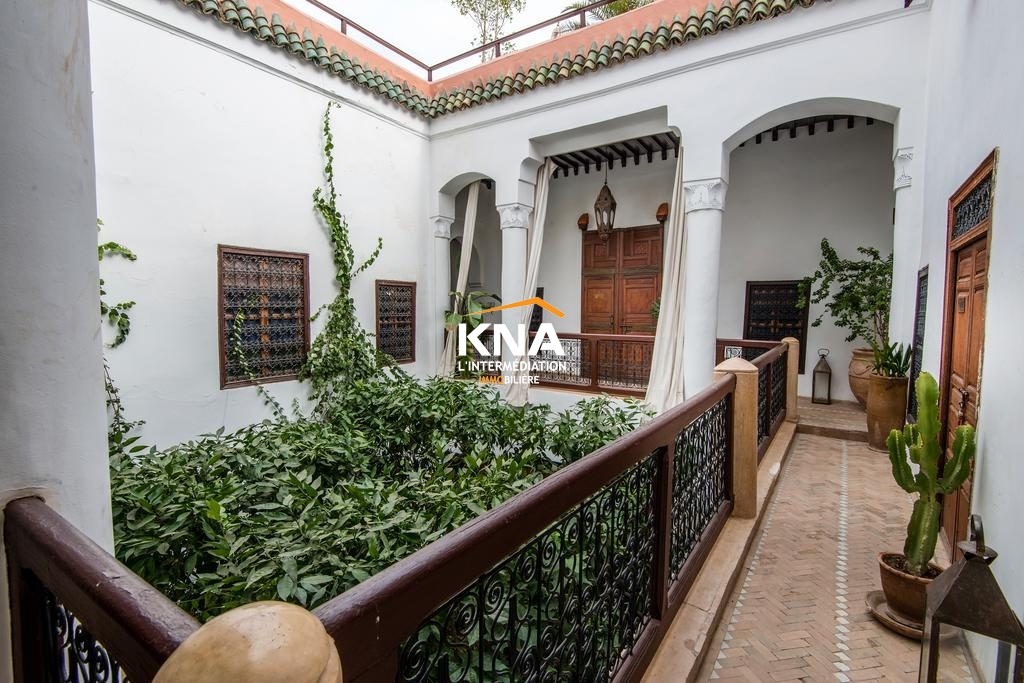
Imagine an inner courtyard bathed in golden light, where the gentle murmur of a fountain blends with the fragrance of blooming orange trees… The Moroccan riad is unmatched because it seamlessly blends thousand-year-old bioclimatic cooling, total privacy from the urban bustle, and a level of handcrafted artistry that modern architecture simply cannot replicate. The patio is not just a room; it is the vital soul of an exceptional home.
A Timeless Sanctuary
The patio is far more than a simple open-air corridor. It is the beating heart of the Moroccan riad: every room is arranged around it, creating a natural flow between indoor and outdoor living. Here, you encounter the finest expressions of local craftsmanship: multicolored zellige tiles, polished tadelakt, carved arches, and moucharabieh screens filtering sunlight like lace.
Each home tells a unique story. Some patios are minimalist, while others burst with lush greenery. Yet, every Moroccan riad shares the same atmosphere of absolute serenity, an invaluable refuge amid the lively energy of the medina.
An Ancestral Bioclimatic Masterpiece
Did you know? The central fountain is not just decorative. Through evaporation, it naturally cools the air by several degrees, a form of passive air conditioning more than 1,000 years old.
In Marrakech, summer heat can be intense. The Moroccan riad is proportioned to capture shade, creating an exceptional indoor microclimate. Thick earthen walls store the night's coolness, while vegetation like jasmine and bougainvillea enhances the refreshing effect. It is a remarkable model of sustainable architecture that inspires designers worldwide.
An ancestral bioclimatic masterpiece
In Marrakech, summer heat can be intense. The patio carefully oriented and proportioned to capture shade during the hottest hours creates an exceptional indoor microclimate. Thick earthen walls store the coolness of the night and release it gradually throughout the day. Vegetation orange trees, jasmine, and bougainvillea further enhances this refreshing natural effect.
Living in a riad means living with the climate, not against it. It is a remarkable model of bioclimatic architecture that is increasingly recognized worldwide as an inspiration for sustainable design.
A Daily Art of Living
Life in a Moroccan riad follows the rhythm of the sun:
Morning: Coffee served as sunlight dances across the zellige tiles.
Midday: A convivial meal in the shade of orange trees.
Afternoon: A peaceful reading session in a bhou (shaded alcove).
Evening: Mint tea beneath a star-filled sky, accompanied by the soothing fountain.
Riad or Hotel: Why the Riad Wins Every Time
A hotel, however luxurious, remains a standardized space. A Moroccan riad, by contrast, is a world of its own. Once the door closes, the city fades away. You are no longer a room number; you are at home in a residence that has stood for centuries.
Where hotels offer uniform service, the Moroccan riad provides a personalized experience: a private cook and total intimacy. For families or groups, renting a Moroccan riad in full offers better value and more freedom than any high-end hotel.
Investing in a Riad: more than a property purchase
For international buyers, acquiring a riad with a patio means owning a truly exceptional property with rare and growing heritage value. It is also a highly attractive rental investment: traveller’s from around the world dream of staying in an authentic riad rather than in an impersonal hotel.
Seasonal rental demand remains strong, property prices in the medina are still accessible compared with other cultural capitals worldwide, and the rarity of high-quality riads ensures long-term appreciation. It is an investment of both passion and reason.
Ready to Find Your Ideal Riad in Marrakech?
Our KNA team will guide you through every step of your project.
→ Discover our available riads